CHOLERAFORNIA: The Gold Rush Epidemic That Emptied a City
In October 1850, California celebrated statehood while cholera moved through its ports, rivers, and boomtowns. In Sacramento, the disease emptied streets, overwhelmed a makeshift hospital, killed hundreds, and helped turn one physician into a pioneer of public health.
Picture this: you have just completed the worst road trip of your life, except much of it happened on foot.
It is 1850. You crossed Panama by canoe, mule, and mud because you heard there was gold in California and wanted to arrive before everyone else. You are sunburned, bug-bitten, and probably poorer than when you started—but you made it to the Pacific side of the isthmus. One steamship ride stands between you and San Francisco.
The ship is the Carolina.

A few days into the voyage, passengers begin dying. This is not ordinary seasickness. Cholera can turn severe with terrifying speed. A person may appear healthy, become violently ill, and die from dehydration within a day.
By the time the Carolina reaches San Francisco, cholera has reached the Pacific Coast. Soon it will move inland to a young river city called Sacramento.
Three Bad Ways to California
The Gold Rush transformed California at astonishing speed. Gold was discovered at Sutter’s Mill in 1848. By the end of 1849, tens of thousands of newcomers—perhaps around 100,000—had poured into California, most of them young men hoping to get rich.
They had three basic routes west, and none of them was especially pleasant.
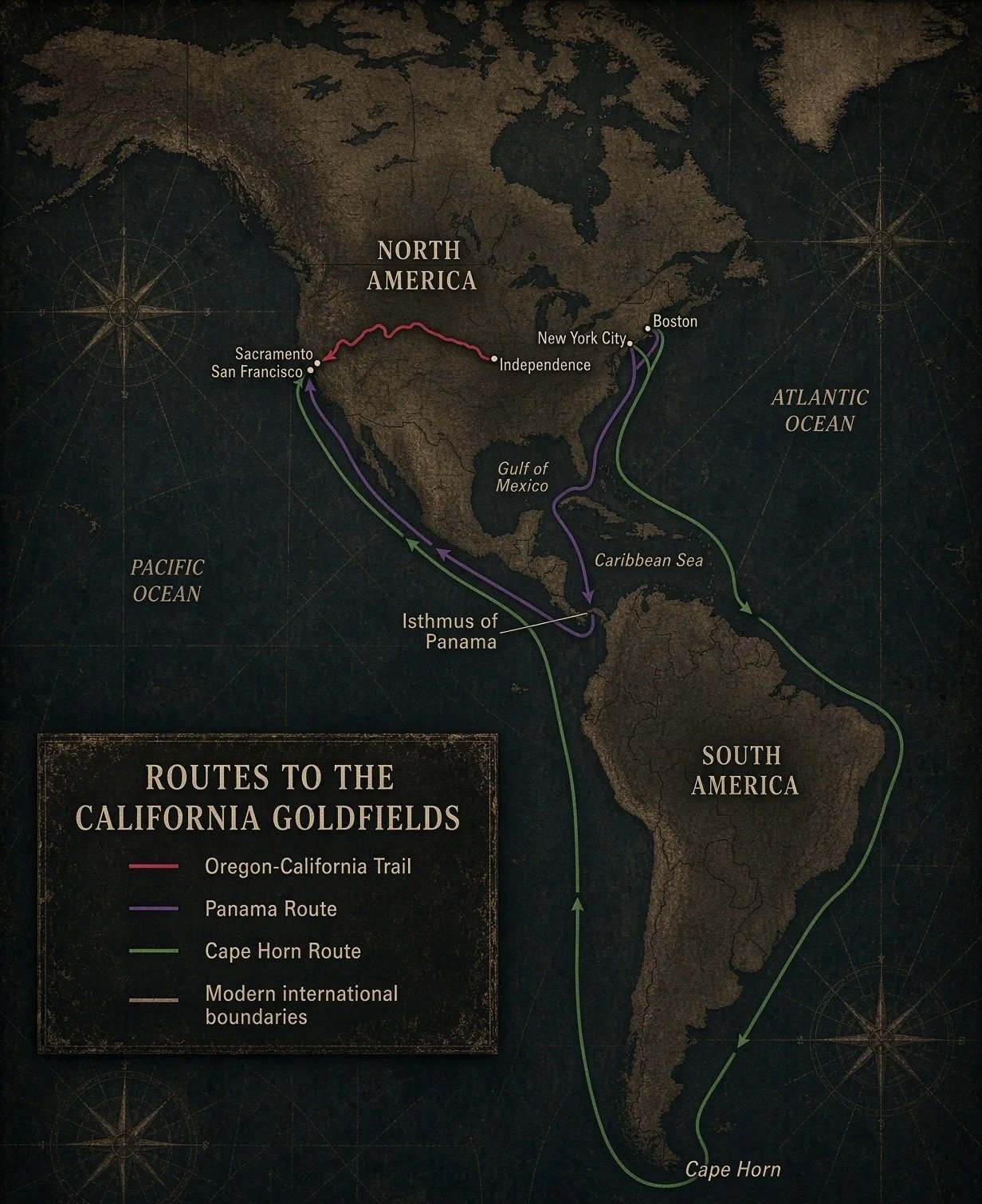
The first was the overland trail: wagon, oxen, deserts, mountains, months of walking, bad water, and cholera spreading through heavily used campsites. The second was a voyage around Cape Horn, sailing from the East Coast to the bottom of South America and back up the Pacific—a journey that could take five or six months.
The third option was Panama. Travelers sailed to the Atlantic side, crossed the isthmus, and waited for another ship heading north to California. On paper, it was the smart choice. It was faster.
In practice, thousands of travelers crowded into a hot, wet bottleneck where clean water and sanitation were unreliable. Cholera had reached Panama by 1849. The “fast” route had become an efficient conveyor belt for disease.
Death Aboard the Carolina
The Carolina left Panama for San Francisco in September 1850. The voyage took about twenty days, with stops at Acapulco and San Diego.
During the passage, cholera spread through the ship. Sacramento physician Thomas M. Logan soon reported that the vessel had experienced twenty-two cases and fourteen deaths. A modern compilation of maritime records identifies at least thirteen people who died at sea between mid-September and early October.
They were not anonymous statistics. The surviving list includes A. Schmitz of New York, P. H. Grimes of Washington, D.C., John P. Pierson, T. F. Green, and others—one death after another.
Imagine being trapped aboard that ship. Nobody could simply get off. Passengers did not understand bacteria or fecal contamination. Most Americans still explained epidemic disease through miasma: poisonous air rising from filth, decay, swamps, or foul smells.
All the passengers knew was that the ship had left Panama crowded and was arriving in California with more than a dozen people missing.
The Carolina reached San Francisco on October 7, 1850. She was not quarantined.
Within days, two passengers from Ohio—Mr. Montgomery and Erastus Belden—died of what a San Francisco newspaper called “well-defined cholera.” They died in the same room in a building on Commercial Street.
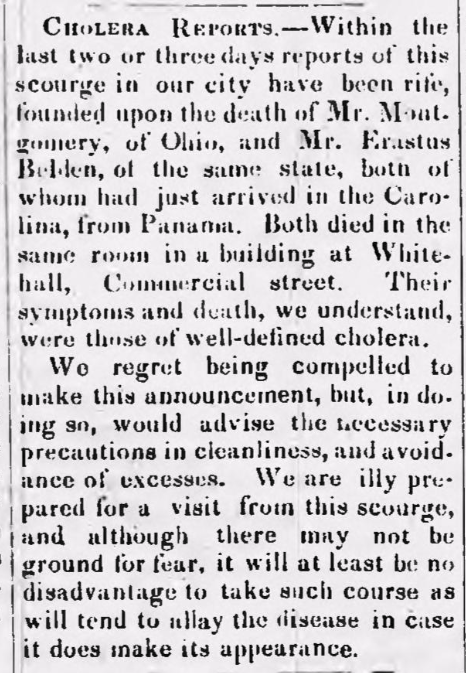
The Daily Pacific News soon put the blame directly on the ship:
“So the passengers of the Carolina brought it with them from the Isthmus. And those who landed here have carried it to Stockton.”
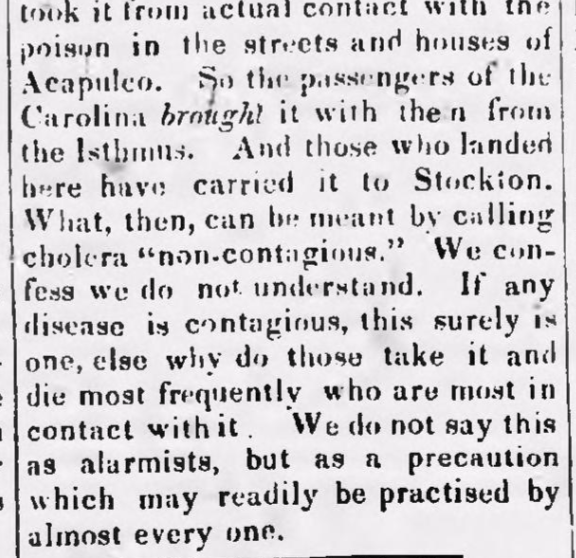
At nearly the same moment, however, the San Francisco Medical Society resolved that cholera did not exist in the city “to an extent” requiring extraordinary public action.
In plainer language: there was a disease-ridden ship, a booming port, and a medical establishment that did not yet believe the situation justified an emergency response.
What could go wrong?
Two Ships, Two Stories
While the Carolina quietly brought disease, another vessel brought news worth celebrating.
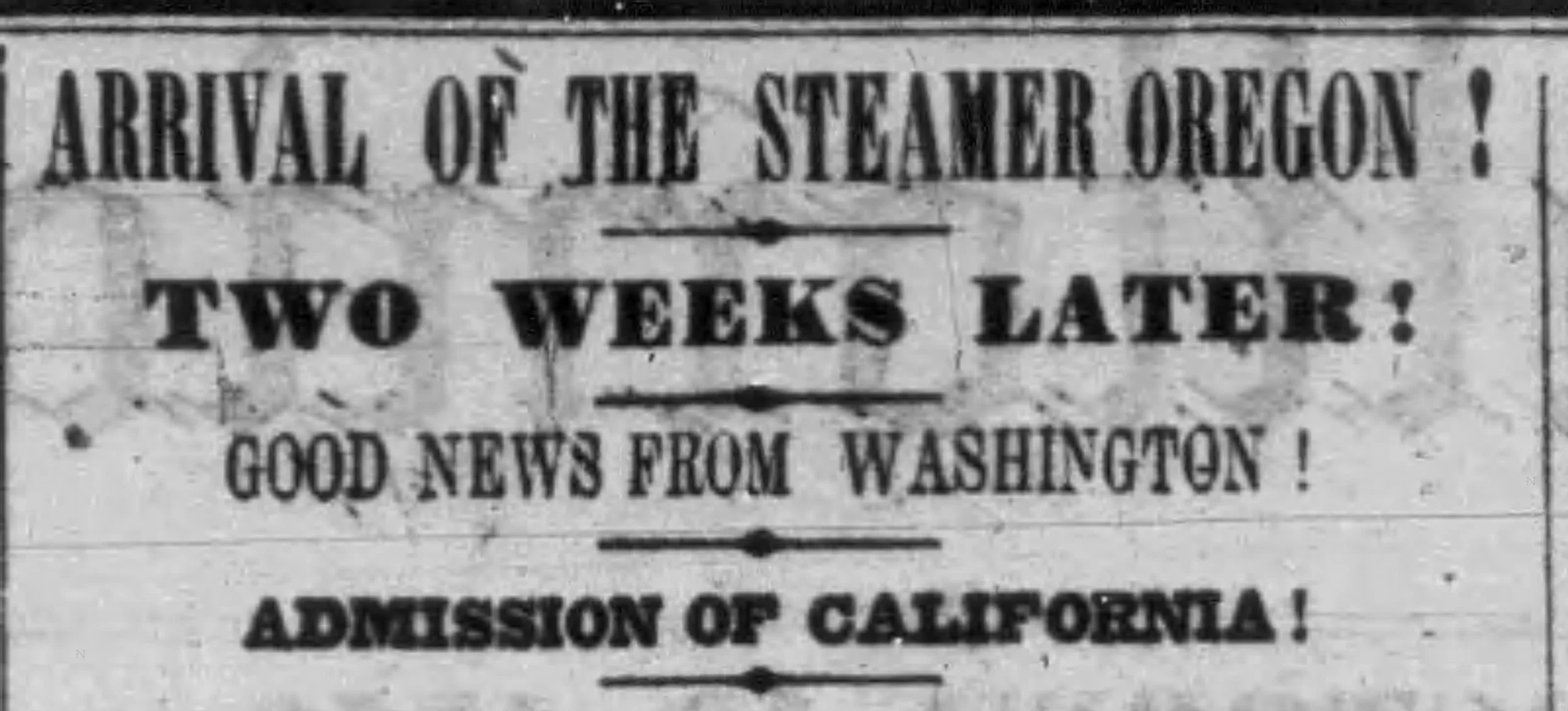
On October 18, the steamer Oregon arrived in San Francisco with official confirmation that Congress had admitted California as the thirty-first state. The city erupted. Bells rang. Cannon fired. Flags appeared everywhere.
The contrast could hardly have been sharper.
One ship had brought cholera on October 7. Another brought statehood news on October 18. Same month, same harbor—completely different stories.
The statehood news then traveled upriver. San Francisco and Sacramento were linked by steamers carrying mail, freight, miners, gamblers, and anything else people would pay to move. One of those vessels was the New World, which carried the news to Benicia and Sacramento around October 18 and 19.
Later histories turned this complicated weekend into a wonderfully tidy legend: a sick man stepped off the New World, collapsed on Sacramento’s levee, and became the city’s first cholera victim.
One boat. One patient. One precise moment when the epidemic began.
Unfortunately, the surviving evidence refuses to cooperate.
The First Sacramento Cases
Thomas Logan traced his first Sacramento cholera case to the evening of October 18. The patient had recently come in from the country and stopped at Logan’s hospital on the edge of town because he could go no farther.
A Sacramento newspaper placed the first “positively ascertained” case in the city on Saturday morning, October 19. That man died within twenty-four hours. The same report described another man being attacked that morning on the levee near Dana’s Landing and dying within a few hours.
On Sunday, October 20, the coroner held an inquest over John Bradbury, approximately twenty-one years old and formerly of Newport in Jasper County, Illinois. Bradbury became ill around midnight and died on the levee at about ten the next morning.
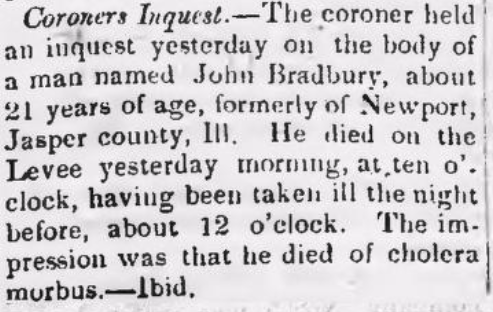
Physician John Frederick Morse later recalled finding a man on the levee early on October 20 in the collapsing stage of the disease:
“I saw him at sunrise—he was then expiring.”
Whether Morse and the newspaper were describing the same man cannot be established with certainty. The city undertaker’s register also contains an October 20 cholera death for John Deidrich, a twenty-one-year-old from Chicago—another young newcomer dying almost as soon as the outbreak became visible.
By Monday evening, October 21, Sacramento’s city physician told the Common Council that seven cases had come to his attention. Five were already dead.
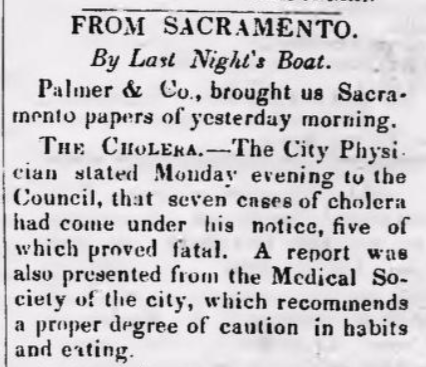
By the time later storytellers began blaming one passenger aboard the New World, cholera was already appearing through overlapping arrivals and multiple deaths. The disease had no interest in providing historians with a clean opening scene.
A City Built Too Fast
Cholera could scarcely have found a more vulnerable city.
Sacramento was a new Gold Rush boomtown. A settlement of perhaps 150 people in 1849 had grown to somewhere between 6,000 and 8,000 by late 1850, depending on which contemporary estimate is used.
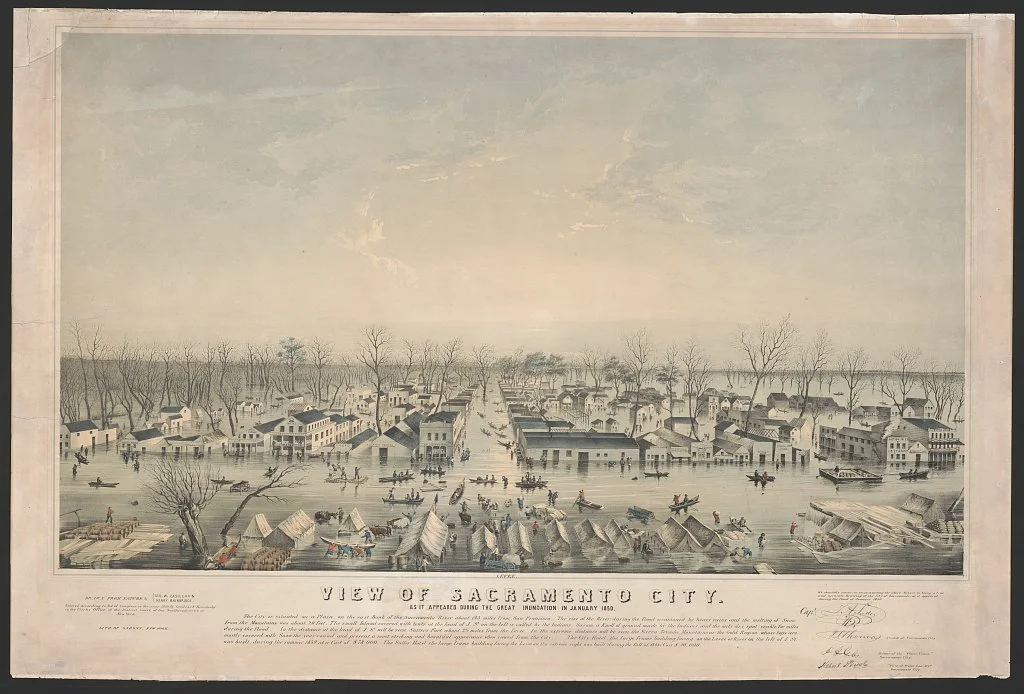
The city was held together with canvas tents, rough wooden buildings, muddy streets, crowded lodging houses, and optimism. It had already endured a disastrous January flood and a major fire. In August, the violent land dispute remembered as the Squatters’ Riot left Sheriff Joseph McKinney dead and Mayor Hardin Bigelow shot four times.
Now October had brought cholera.
Many newcomers entered Sacramento already exhausted by months of travel, poor food, exposure, and questionable water. They were not arriving in a healthy, established city. They were entering a place that had been improvising survival almost from the day it appeared.
Sacramento initially tried to explain the danger away. One local report insisted there was “very little danger.” Early deaths were sometimes labeled “cholera morbus,” a broad nineteenth-century term for severe gastrointestinal illness, rather than the dreaded epidemic cholera.
That optimism lasted about a week.
Fighting the Wrong Enemy
Today, cholera is known to spread primarily through food or water contaminated with the bacterium Vibrio cholerae. Sacramento’s residents did not know that in 1850.
The dominant theory blamed miasma—poisonous air associated with foul smells and decaying material. If bad air caused disease, cleaning up anything that smelled terrible appeared entirely sensible.
Following the city physician’s warning, Sacramento’s council ordered property owners to remove rubbish and “offensive matter” within twenty-four hours. According to historian Mitchel Roth’s reading of the Sacramento Transcript, violators faced a $500 fine—an enormous penalty in 1850.
Residents began burning old clothing, shoes, hides, spoiled food, and whatever refuse had accumulated in a city growing faster than it could clean itself.
The result was a terrified Gold Rush town filled with heat, mud, smoke, and cholera.
The officials were not foolish. They were acting logically from a mistaken understanding of transmission. They were trying to clean the air while contaminated water continued to spread the disease.
The City Empties
Then Sacramento began to disappear.
People grabbed what they could carry and fled. Some went downriver to San Francisco. Others headed toward Hangtown and the mining camps. Anyone with access to a wagon, horse, or boat had a possible escape route.
John Morse later wrote that Sacramento’s population fell to no more than one-fifth of its usual size. A later county history expressed the same catastrophe from the opposite direction: four-fifths of the population had left town. Either way, most people ran.
Shops closed. Gambling halls went dark. Streets emptied.
A correspondent visiting for the Alta California described streets “deserted, and frequented only by the hearse.” He estimated the daily mortality at about sixty and counted 188 reported deaths in one week.
Merchant and humorist Alonzo Delano wrote home on November 5:
“Cholera is here, thirty to sixty deaths per day. Gamblers beginning to be frightened and many leaving. Business falling off rapidly.”
A city famous for men willing to gamble everything on gold had encountered odds frightening enough to make even the gamblers leave.
Counting the Dead
The precise death toll cannot be recovered.
Thomas Logan went through the available mortuary records and calculated that from October 19 through November 15, cholera had killed 364 people from a population he estimated at 6,000. That was approximately one person in seventeen.
Even Logan called his total “a most moderate calculation.” It was based primarily on the records of two coffin makers and undertakers. It did not capture every private burial, unidentified body, incorrect diagnosis, or death omitted during the confusion.
A later count found roughly 700 graves dug during the epidemic period. Historian Mitchel Roth has estimated that 800 to 1,000 people may have died over approximately five weeks—perhaps 15 to 17 percent of the people who remained in Sacramento.
Morse stated the problem bluntly: the true number “cannot be ascertained.” The city was in too much confusion, and too many burials went unrecorded.
The safest conclusion is also the most important: hundreds of people died in a matter of weeks. The undertakers’ books recorded roughly 360 cholera deaths. The cemetery evidence suggests substantially more. Most of their graves were never marked.
The Doctors Who Stayed
Sacramento had approximately ninety physicians in and around the city. According to Logan, not one fled.
Morse remembered them “falling like the foremost soldiers of a desperate charge.” By his later count, seventeen physicians had been buried in Sacramento’s sandhill cemetery before the epidemic subsided.
Logan’s November 1850 report counted fourteen dead physicians at that point. Morse’s 1853 account gave seventeen, the number Sacramento later adopted for its memorial. The difference reflects the timing and limits of the records rather than a reason to discard either account.
Many of the physicians were remarkably young. Dr. George H. Mason was twenty-three. Dr. W. Carpenter was twenty-six. Dr. Henry F. Herr was twenty-six.
Morse wrote:
“Not a single educated physician turned his back upon the city in its distress and threatened destruction.”
These were not simply “seventeen doctors” in a historical statistic. They were young men who had come west seeking opportunity, just like the miners and merchants around them. They could have fled. They stayed.
Only one of the seventeen, Dr. Pliny P. Greene, eventually received a clearly marked grave. His family later had him reinterred in a family plot.
The others were buried in the area of Sacramento’s Historic City Cemetery known as the Tier Grounds—the old sandhill cemetery used for mass burials and people who had little money or no family nearby. A plaque installed in 2001 states that “nearly a thousand” victims of the 1850 epidemic rest there.
In 1977, Sacramento erected a memorial carrying sixteen doctors’ names and a seventeenth entry reading “Name Unknown.” Cemetery researchers later concluded that the unknown physician was Dr. Peter Crum.
A doctor died treating patients in a collapsing boomtown, and it took approximately 140 years to restore his name. That is the scale of the disorder Sacramento experienced.
The Hospital and Ledger
Sacramento did more than burn refuse and hope for the best. The city secured a large frame building on L Street as a cholera hospital for people who could not afford private care.
From October through late November, the hospital admitted 162 patients. When it closed on November 23, 107 of them had died and 55 had been discharged alive.
Even in a city assembled in a hurry, people were trying to build a response. The hospital treated the destitute. Private doctors made calls through damaged neighborhoods. Undertakers searched for lumber and built coffins as quickly as possible. Burial crews struggled to keep pace.
The hospital ledger and the undertakers’ books became the closest thing Sacramento possessed to a census of its dead.
Bigler and Bigelow
Two men with confusingly similar names emerged from the epidemic with completely different stories: John Bigler and Hardin Bigelow.
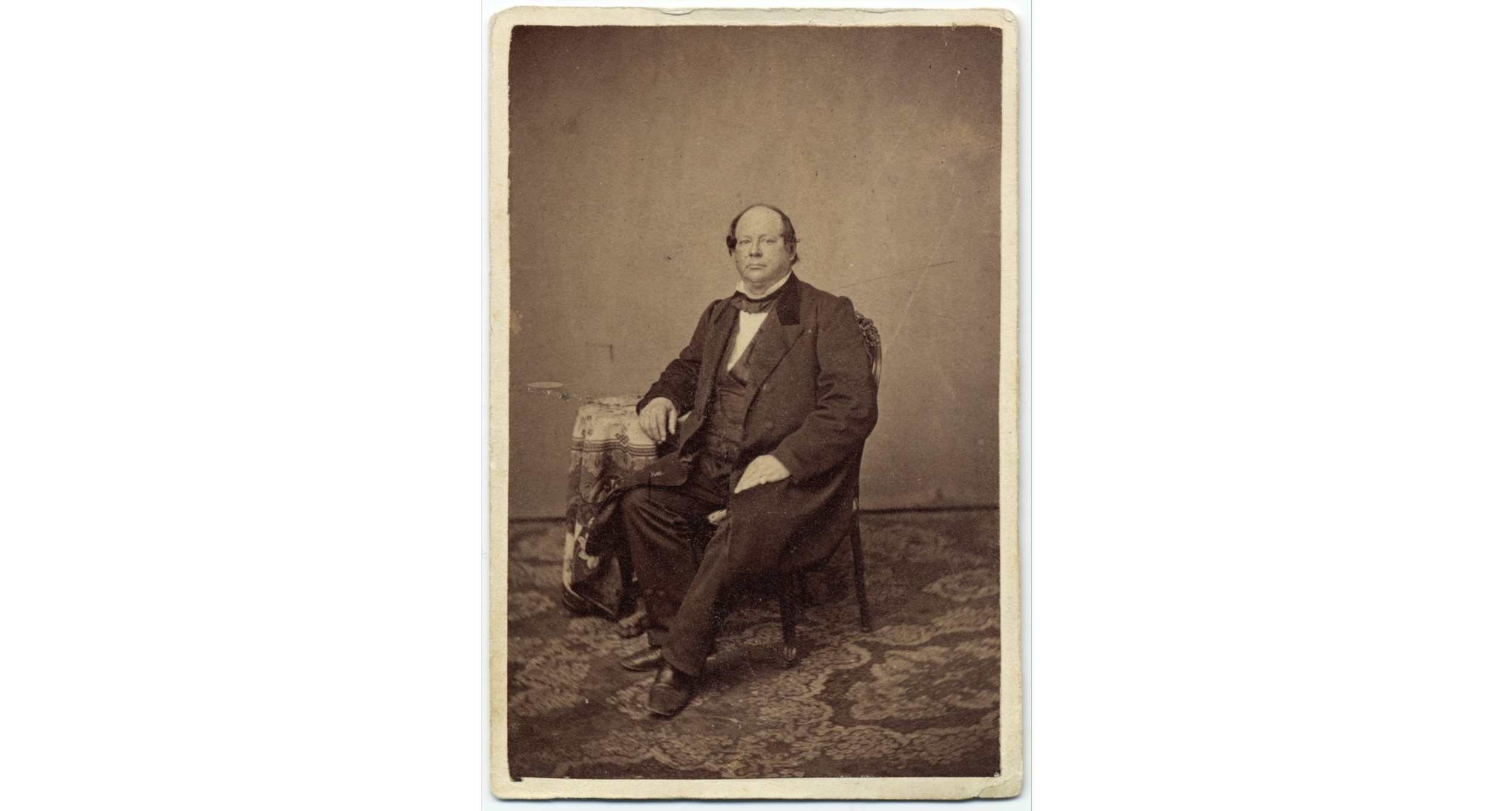
John Bigler was Speaker of the California Assembly in 1850. During the outbreak, he remained in Sacramento and personally helped care for the sick.
Morse remembered Bigler entering some of the worst rooms in the city with a lump of gum camphor “as large as a moderate sized inkstand,” sometimes in his pocket and sometimes held near his nose. The strong odor was thought to offer protection against poisonous air.
Bigler was not merely signing orders. Morse credited him with administering relief “with his own hands.” He survived. California voters elected him governor in 1851, and he took office in January 1852.
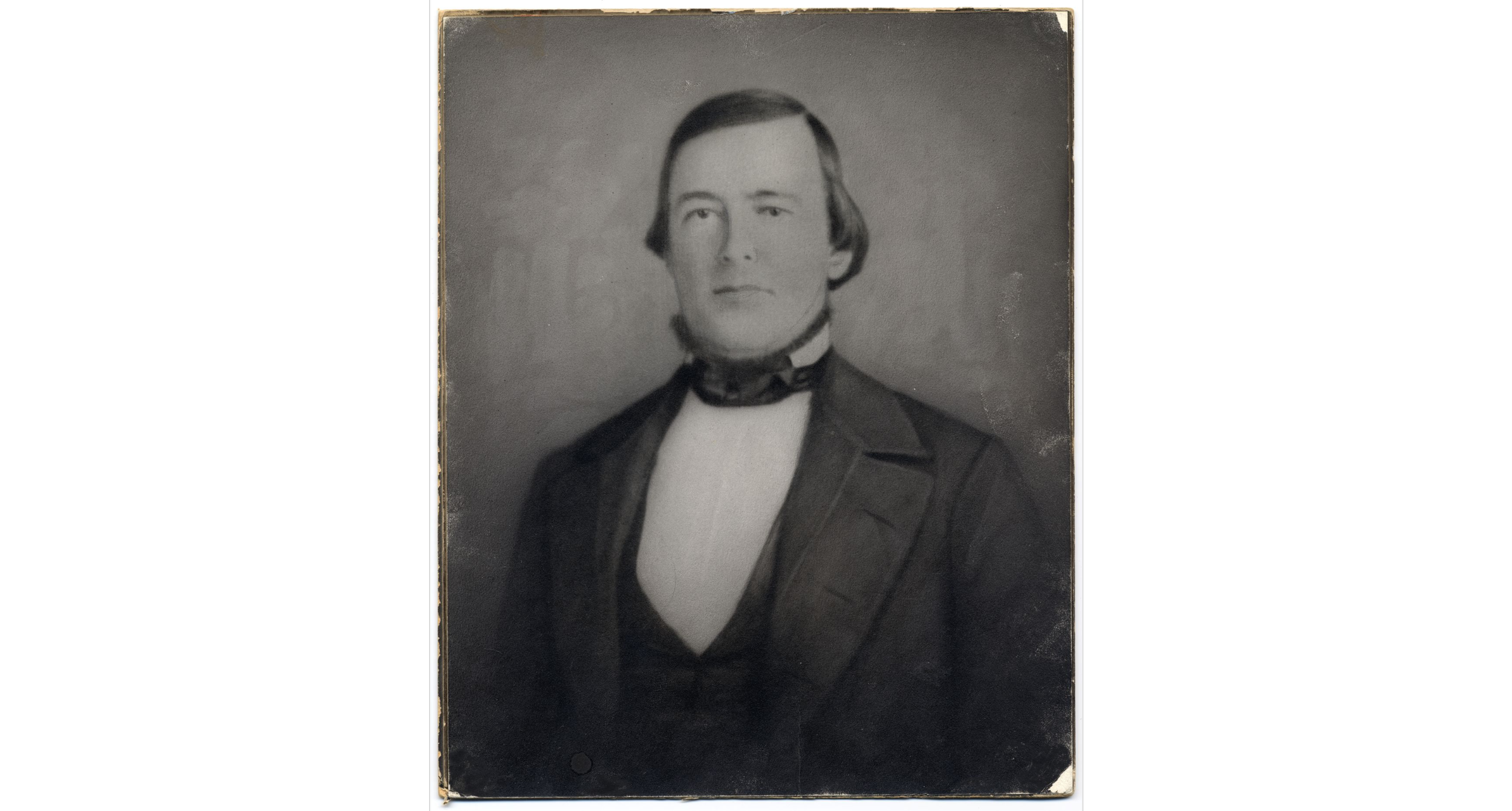
Hardin Bigelow was Sacramento’s first elected mayor.
During the Squatters’ Riot in August 1850, Bigelow led city forces against armed settlers involved in a violent land dispute. Sheriff Joseph McKinney was killed. Bigelow was shot through the body, thigh, cheek, and hand. His injured hand was amputated at the wrist.
He survived and went to San Francisco to recover.
Then cholera found him.
On November 27, while staying at San Francisco’s Union Hotel, Bigelow became ill and died in less than twenty-four hours. The Daily Pacific News announced:
“It becomes our painful duty this morning, to announce the death, by cholera, of Hon. Hardin Bigelow, Mayor of Sacramento City.”
Four bullets had failed to kill him. Cholera did it in one night.
Bigelow’s body was placed aboard a boat for Sacramento, escorted by members of the California Guards, city officials, and other mourners. He was buried at New Helvetia Cemetery. When that cemetery was cleared in the 1950s, his remains were moved to Sacramento’s City Cemetery and marked.
Bigler stayed in the epidemic city, nursed patients, survived, and became governor. Bigelow survived four gunshot wounds and an amputation, only to die in a San Francisco hotel room from a disease capable of killing in hours.
History rarely produces tidy arcs, but it occasionally produces brutal symmetry.
The Epidemic Fades
Sacramento’s cholera epidemic did not end with a miracle treatment or a dramatic declaration. It simply began to weaken.
A mortality report covering twenty-four hours around October 28 counted twenty-seven deaths, eighteen attributed to cholera. Later accounts described daily tolls of fifty or sixty during the worst period.
By November 12, a Sacramento report listed seven cholera deaths. The newspaper also said business was becoming “much brisker” and people were beginning to return.
By November 15, Logan reported that the death toll had tapered to one or two per day. A later county history claimed the “plague” had entirely disappeared by November 17. The L Street hospital closed on November 23.
There was no cure and no sudden discovery that the water was responsible. There were simply fewer funerals until the city cautiously resumed ordinary life.
From the residents’ perspective, cholera had appeared, killed hundreds, and withdrawn almost as mysteriously as it came. From a modern perspective, several forces probably overlapped: vulnerable residents died early, much of the population fled, crowded lodging houses emptied, patterns of water use changed, and cooler weather altered daily life.
Sacramento’s residents could not see those mechanisms. They only knew that their new city had nearly died and somehow remained standing.
Thomas Logan Counts
Thomas Muldrup Logan is the reason this disaster did not shrink into a single sentence in a county history.
Born in 1808, Logan studied medicine and witnessed cholera in Paris in 1832. He later practiced in New Orleans. He arrived in California in early 1850, spent time in the mining country, and settled in Sacramento shortly before the epidemic.
During the crisis, Logan treated patients, watched the population flee, counted deaths, and compared what he saw with the undertakers’ records.
On October 29, in the middle of the outbreak, he sent a medical journal his report on the Carolina and California cholera. On November 30, he completed “A History of the Epidemic Cholera that Prevailed in Sacramento City in the Autumn of 1850.” That report preserved his count of 364 deaths in twenty-eight days, his population estimate of 6,000, and his conclusion that approximately one resident in seventeen had died.
Without Logan’s work, much of the epidemic would survive only through scattered newspaper notices, cemetery entries, and later memories.
He did not stop after 1850. Cholera returned to Sacramento in 1852, producing approximately one hundred recorded burials, most of them in September. Logan studied that outbreak as well.
He also recorded weather conditions day after day, hoping temperature and atmospheric changes might explain epidemic patterns. He gathered mortality information from physicians, undertakers, and coroners. Over time, he became one of California’s strongest advocates for vital statistics and permanent public-health institutions.
From Panic to Public Health
California created its State Board of Health in 1870 and appointed Logan its first Permanent Secretary.
The work was not glamorous. It consisted largely of correspondence, statistics, mortality tables, investigations, and routine measurements. But it addressed the central problem Logan had witnessed in Sacramento: a city confronting mass death without reliable counts, established procedures, or an accurate understanding of how the disease spread.
Logan spent the last years of his life trying to make California less blind when the next epidemic arrived.
In 1876, accounts say he became overheated while conducting State Board of Health business at the Capitol, then walked home in cold night air. He developed severe lung inflammation and never fully recovered. Logan died on February 13, 1876.
The physician who survived Sacramento’s cholera catastrophe and spent decades trying to measure disease was ultimately lost to an illness contemporaries associated with an ordinary chill.
History does not create perfect endings. Sometimes it only rhymes.
Sacramento survived the epidemic. The streets filled again. Businesses reopened. Newcomers continued arriving. Yet beneath the city’s later growth lay a landscape of hurried graves, lost names, and incomplete ledgers.
That may be the most important legacy of “Cholerafornia.” The epidemic was not merely an old public-health disaster. It was a test of what people did when nearly everyone who could leave had gone—and of what a young city learned from the people who stayed.
Works Cited
Primary Sources
Daily Pacific News (San Francisco). Selected issues from October–November 1850, digitized by California Revealed and Internet Archive:
October 9, 1850. Arrival and officers of the Carolina. https://archive.org/details/caclmmgd_000232
October 11, 1850. Deaths of Montgomery and Erastus Belden. https://archive.org/details/caclmmgd_000234
October 12, 1850. “Is Cholera Contagious?” https://archive.org/details/caclmmgd_000235
October 15, 1850. San Francisco Medical Society resolution. https://archive.org/details/caclmmgd_000237
October 19, 1850. Arrival of the Oregon with statehood news. https://archive.org/details/caclmmgd_000241
October 21, 1850. Statehood news carried upriver by the New World. https://archive.org/details/caclmmgd_000242
October 22, 1850. Reprint of John Bradbury’s coroner’s inquest. https://archive.org/details/caclmmgd_000243
October 23, 1850. Reprints concerning Sacramento’s first confirmed cases and the city physician’s report. https://archive.org/details/caclmmgd_000244
October 26, 1850. Sacramento reports describing deaths as cases of “neglected diarrhoea.” https://archive.org/details/caclmmgd_000247
October 30, 1850. Sacramento mortality report. https://archive.org/details/caclmmgd_000250
November 1, 1850. Weekly cholera mortality at Sacramento. https://archive.org/details/caclmmgd_000252
November 8, 1850. Sacramento cholera hospital report. https://archive.org/details/caclmmgd_000258
November 9, 1850. Newspaper dispute over reporting the epidemic. https://archive.org/details/caclmmgd_000259
November 13, 1850. Declining mortality and return of residents. https://archive.org/details/caclmmgd_000262
November 15, 1850. Sacramento report asking about dead rats in the streets. https://archive.org/details/caclmmgd_000263
November 28, 1850. Death of Hardin Bigelow and final cholera hospital statistics. https://archive.org/details/caclmmgd_000272
Delano, Alonzo. Alonzo Delano’s California Correspondence: Being Letters Hitherto Uncollected from the Ottawa Illinois Free Trader and the New Orleans True Delta, 1849–1852. Sacramento Book Collectors Club, 1952. https://archive.org/details/alonzodelanoscal00dela
Logan, Thomas M. Letter dated Sacramento City, October 29, 1850. New Orleans Medical and Surgical Journal, vol. 7, 1850–1851. https://archive.org/details/neworleansmedica7185unse
Logan, Thomas M. “A History of the Epidemic Cholera that Prevailed in Sacramento City in the Autumn of 1850.” In E. D. Fenner, editor, Southern Medical Reports, vol. 2, 1851, pp. 463–468. https://archive.org/details/southernmedicalr02fenn
Logan, Thomas M. Report of the Cholera at Sacramento in 1852: Its Analogy If Not Identity with Malignant Congestive Intermittent. 1853. National Library of Medicine. https://collections.nlm.nih.gov/catalog/nlm:nlmuid-34711310R-bk
Morse, John F. “History of Sacramento.” Colville’s Sacramento Directory for the Year Commencing August 1, 1853. Sacramento, 1853, pp. 35–37. https://archive.org/details/sac-city-directory-1853-1854
Sacramento City Mortality Register, 1850–1852. E. S. Youmans, City Undertaker. Center for Sacramento History. https://archive.org/details/sac-mortality-register
Snow, John. On the Mode of Communication of Cholera. London, 1849. John Snow Archive and Research Companion, Michigan State University. https://johnsnow.matrix.msu.edu/MCC1-PMCC-51MT.pdf
Scholarship and Institutional Sources
California Department of Public Health. “History of the California Department of Public Health.” State of California. https://www.cdph.ca.gov/Programs/OPA/Pages/History.aspx
California State Archives. Inventory of the Records of the Department of Public Health. Online Archive of California. https://oac.cdlib.org/findaid/ark:/13030/kt2489q2vf/entire_text/
Clinkinbeard, Shannon. “Disease on the Western Frontier: Cholera and the California Gold Rush.” Master’s thesis. https://followingdeercreek.wordpress.com/wp-content/uploads/2018/07/disease-during-the-goldrushshannon-clinkinbeard.pdf
National Governors Association. “John Bigler.” https://www.nga.org/governor/john-bigler/
Rosenberg, Charles E. The Cholera Years: The United States in 1832, 1849, and 1866. University of Chicago Press, 1962; revised edition, 1987.
Roth, Mitchel. “Cholera, Community, and Public Health in Gold Rush Sacramento and San Francisco.” Pacific Historical Review, vol. 66, no. 4, November 1997, pp. 527–551. JSTOR, https://www.jstor.org/stable/3642236. DOI: https://doi.org/10.2307/3642236
Sacramento County Coroner. New Helvetia Cemetery: Historical Information. County of Sacramento. https://coroner.saccounty.gov/content/dam/cor/docs/archive/NewHelvetiaBrochure.pdf
Smith, Duane A. “The Trail of the Cholera Epidemic.” Mining History Journal, vol. 1, 1994. https://www.mininghistoryassociation.org/Journal/MHJ-v1-1994-Smith.pdf
Stewart, Ian A. “Quarantine, Disease, and Masonic Relief—170 Years Ago.” California Freemason, May 12, 2020. https://californiafreemason.org/2020/05/12/quarantine-disease-and-masonic-relief/
Memorial and Archival Sources
Center for Sacramento History. Sacramento area city directories and telephone books collection, MS0031. Online Archive of California. https://oac.cdlib.org/findaid/ark:/13030/c87s7vk7
Historical Marker Database. “The 17 Doctors of the 1850 Sacramento Cholera Epidemic.” https://www.hmdb.org/m.asp?m=12485
Historical Marker Database. “Old Tier Grounds.” https://www.hmdb.org/m.asp?m=34290
Maritime Heritage Project. “SS Carolina, October 7, 1850.” Compiled passenger and voyage records. https://www.maritimeheritage.org/passengers/SS-Carolina-7October1850.html
Sacramento Historic City Cemetery. Burial index and historical records. City of Sacramento. https://www.cityofsacramento.gov/ypce/parks/specialty-parks/historic-city-cemetery