I do not like olives. I like olive oil, but as for olives, the only thing they’re good for is putting them on my fingers. Still, the history of olives in California is actually pretty interesting—and surprisingly dramatic.
The California Olive Rush
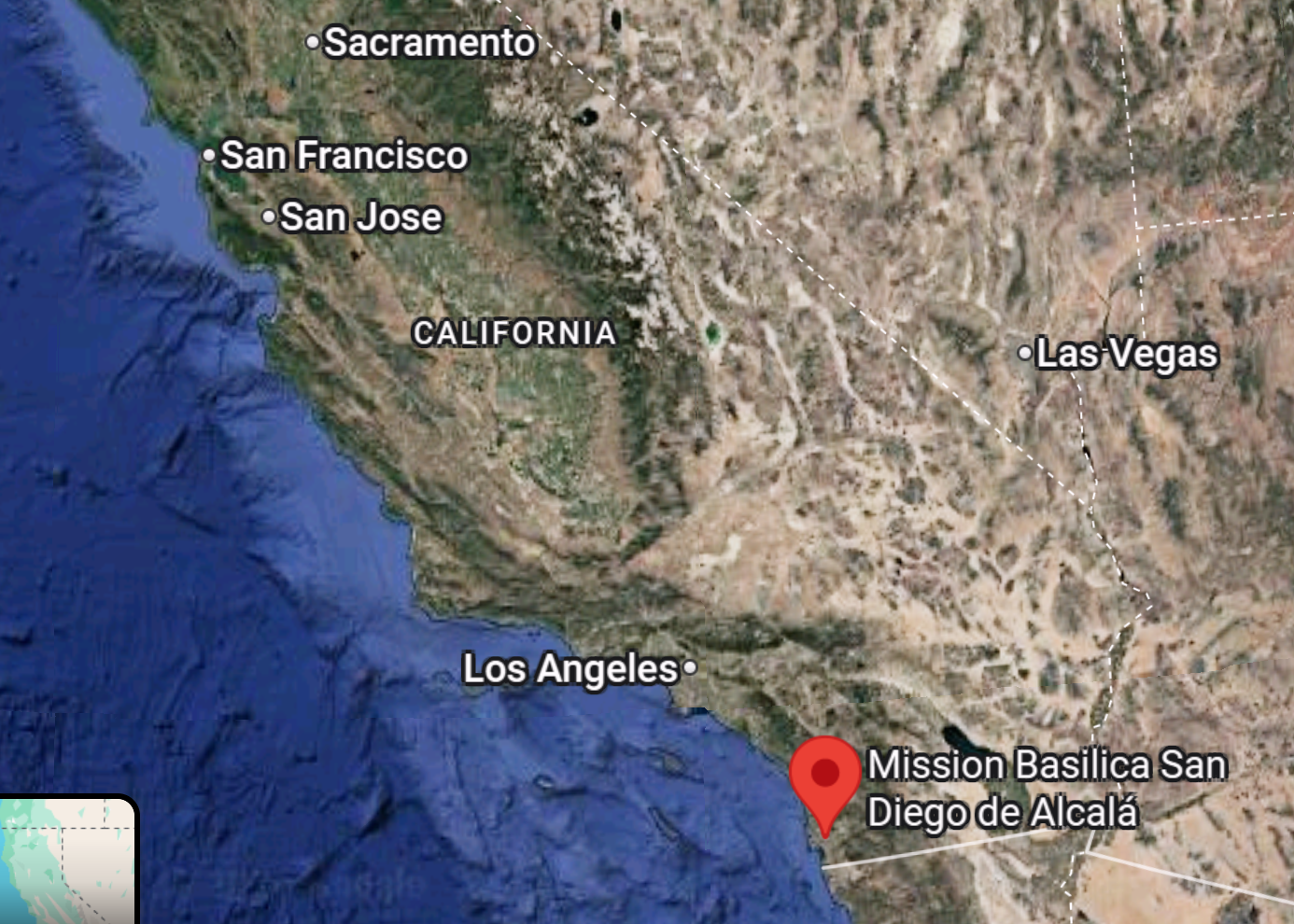
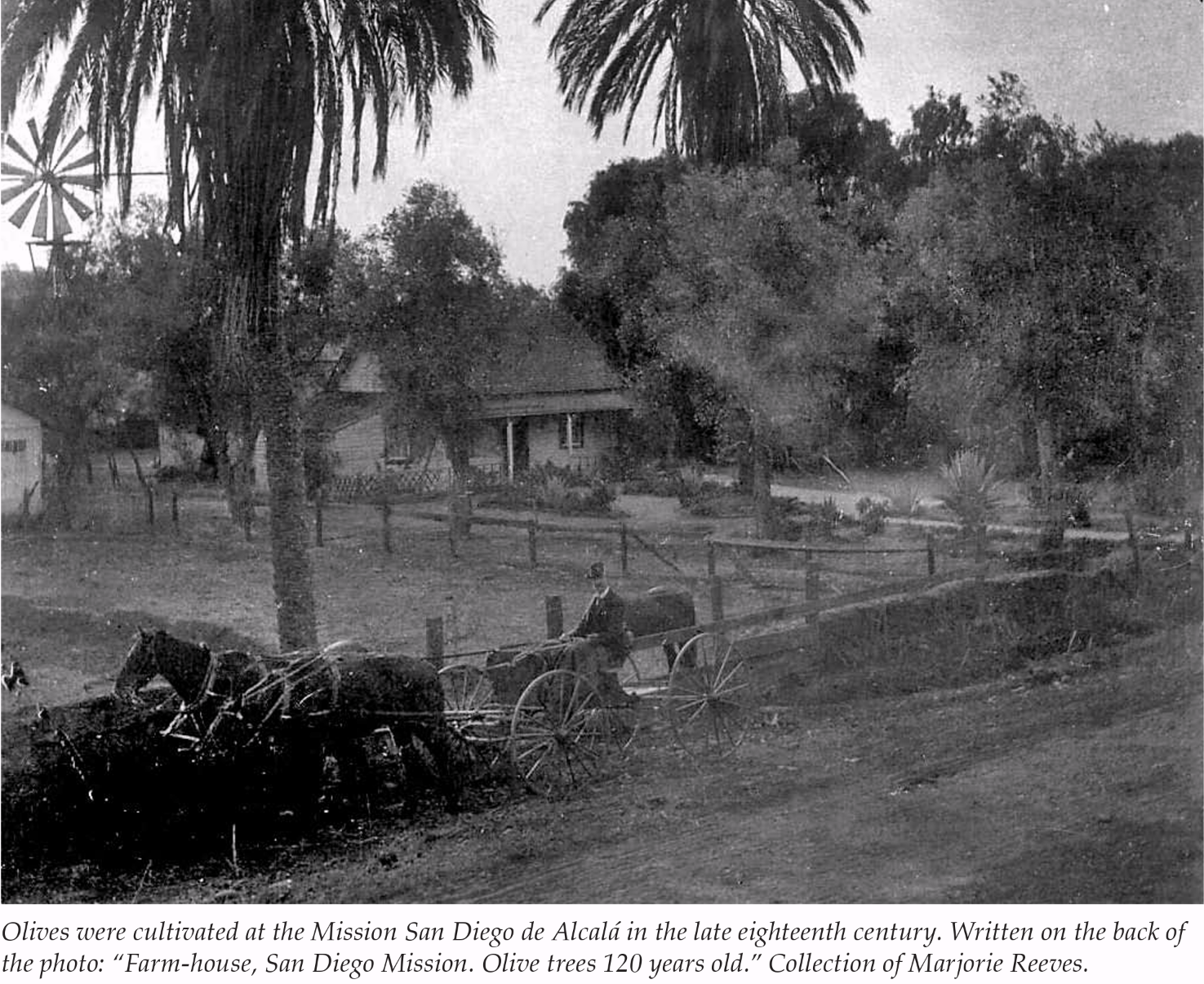
Olives have a long history in the United States, particularly in California. Tracing it back leads down to San Diego at Mission San Diego de Alcalá. Around 1784, the mission was reportedly producing some very good olive oil from its trees. Those olives were later served at the inauguration of Governor Pablo Vicente de Solá in Monterey in 1816, well before California became a state.
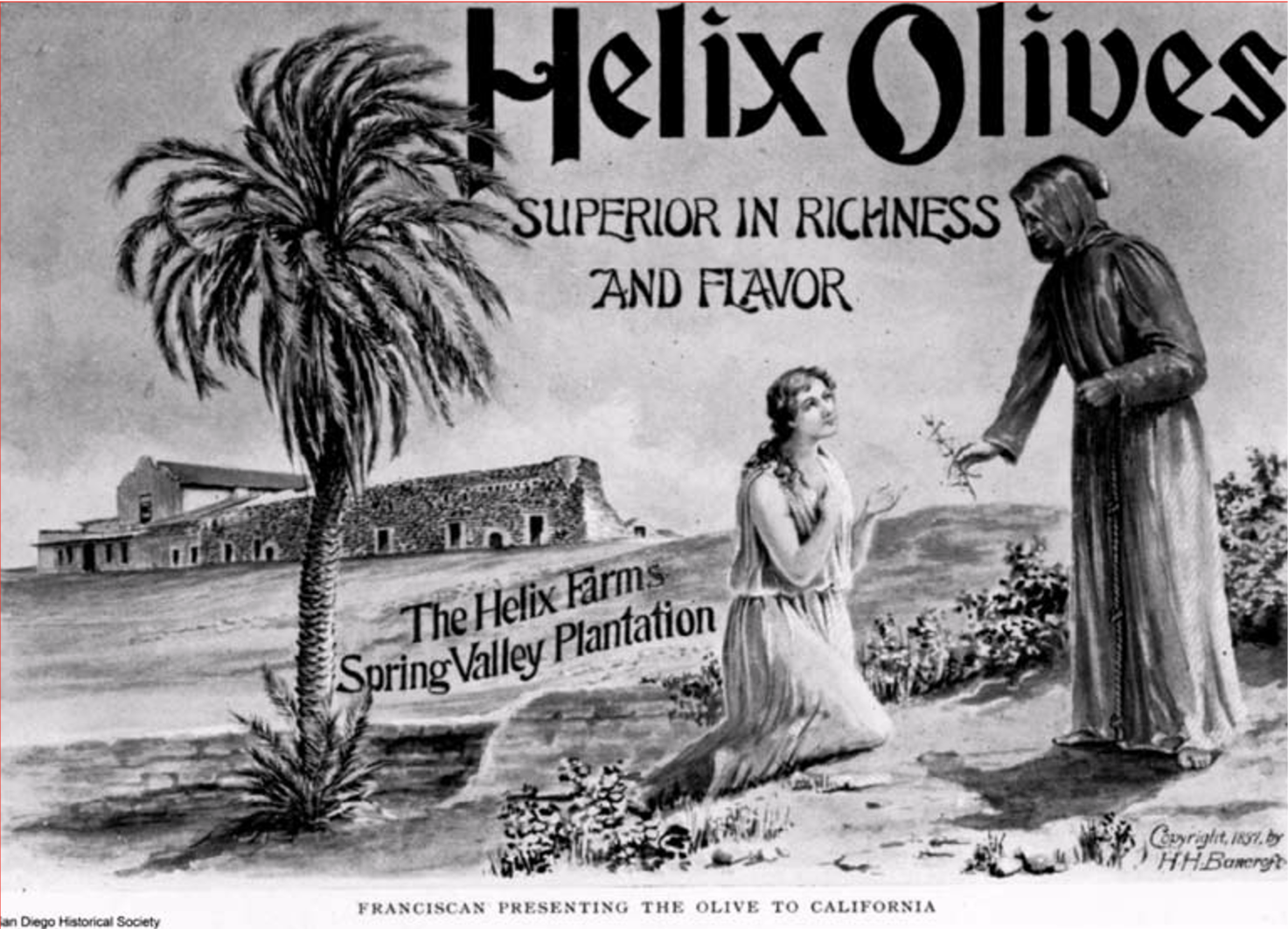
Soon, the olive started getting publicity across the continent. Newspapers began writing about the promising cultivation of oranges and olives. During the Gold Rush, reports argued that California should be valued for its agricultural potential, not just the gold being pulled from the ground. By the way some people talked about olives, you would have thought they had found another gold mine.
Just like the Gold Rush spawned claims of getting rich quick—using language suggesting gold was just lying around waiting to be picked up—similar hype surrounded olives:
Easy conditions: Promoters pitched olive growing as effortless, noting the trees needed little water and could grow in poor soil.
Rapid growth: Newspapers claimed olive trees grew remarkably fast in California.
High quality: Scientific American noted that California olive oil compared to the best Italian oil from Florence and sometimes tasted better than oil from Seville.
Scientific American even went so far as to claim:
“Olive culture is so simple that one of ordinary intelligence may engage in it.”
Apparently, if you could figure out which end of the tree went into the ground, you were in business. Promoters even cited Thomas Jefferson, who once wrote:
“Of all the gifts of Heaven to man, [the olive] is next to the most precious, if it be not the most precious.”
By the late 1800s, olive planting was taking off, and California olive oil was a growing business. It even attracted investments from figures like the famed historian Hubert Howe Bancroft, who broke from his usual history writing to pen a piece on olives.
The 1903 Fake Olive Oil Investigation
California olives were not without their early drama. You may have heard modern claims that some brands fake olive oil by mixing in cheaper oils. Whether or not that happens today, it was definitely a major issue in the late 1800s and early 1900s—big enough that Congress called for a federal investigation.
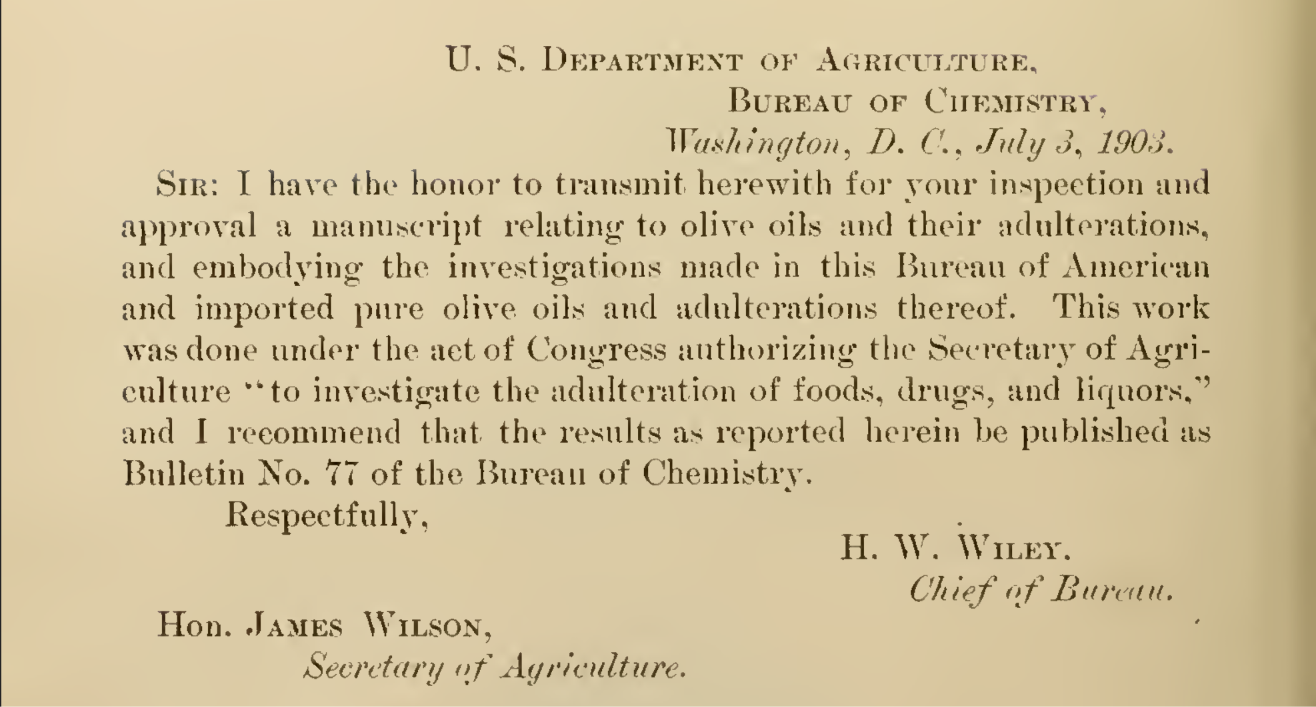
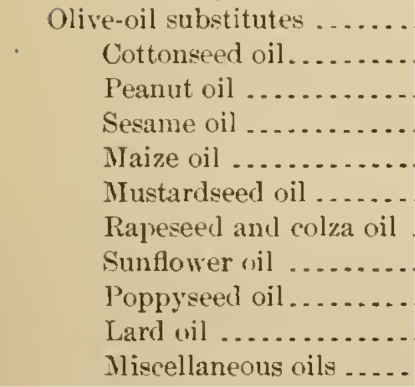
In 1903, the Department of Agriculture published its findings. The investigation confirmed that merchants were bottling cottonseed oil for the most part, along with peanut, sesame, and maize oils, and passing them off as olive oil.
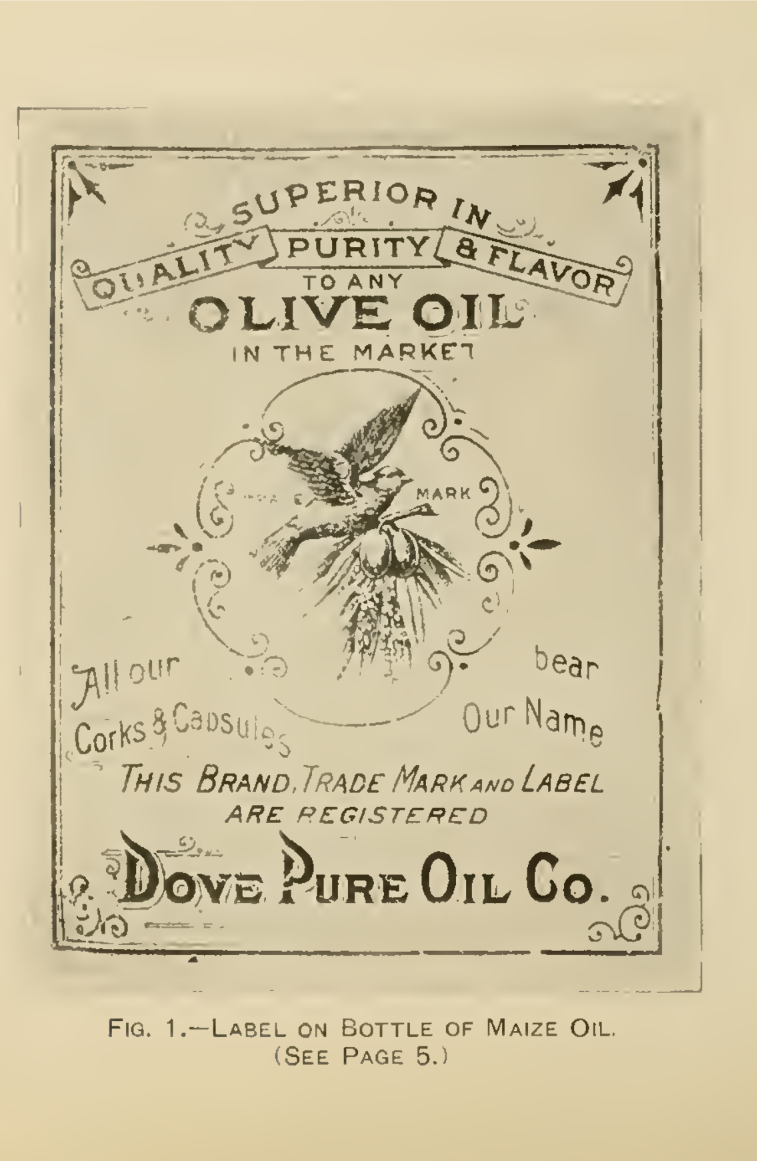
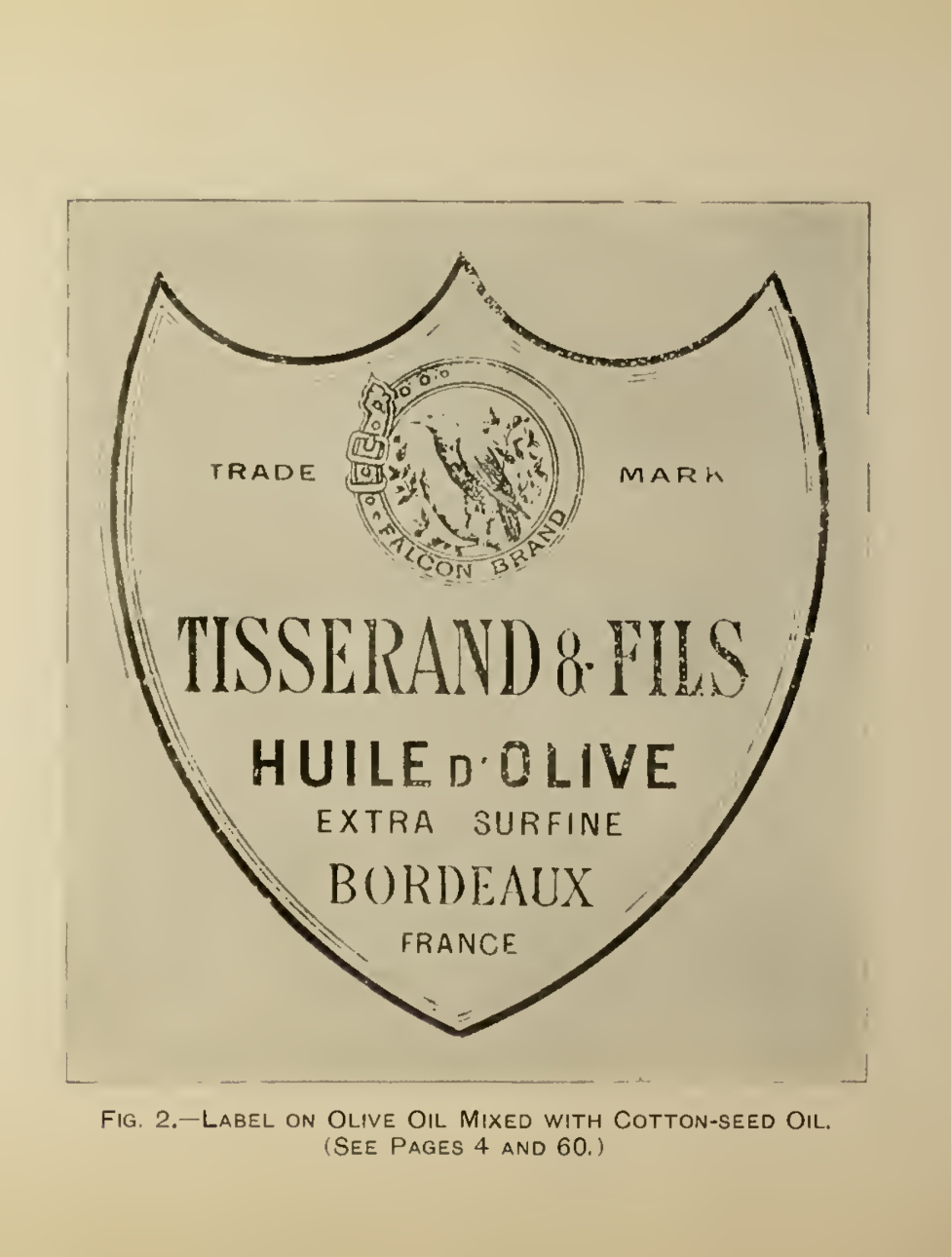
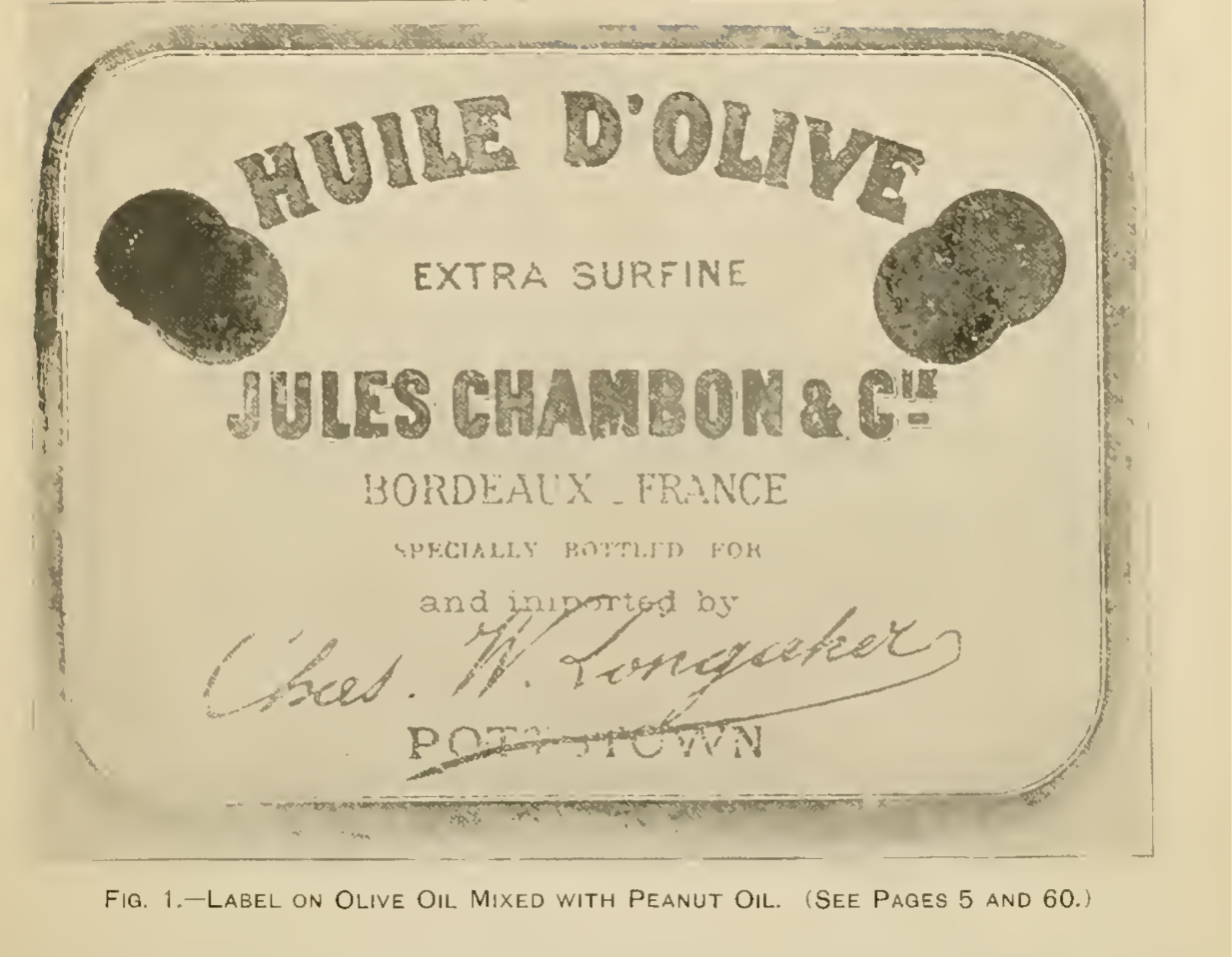
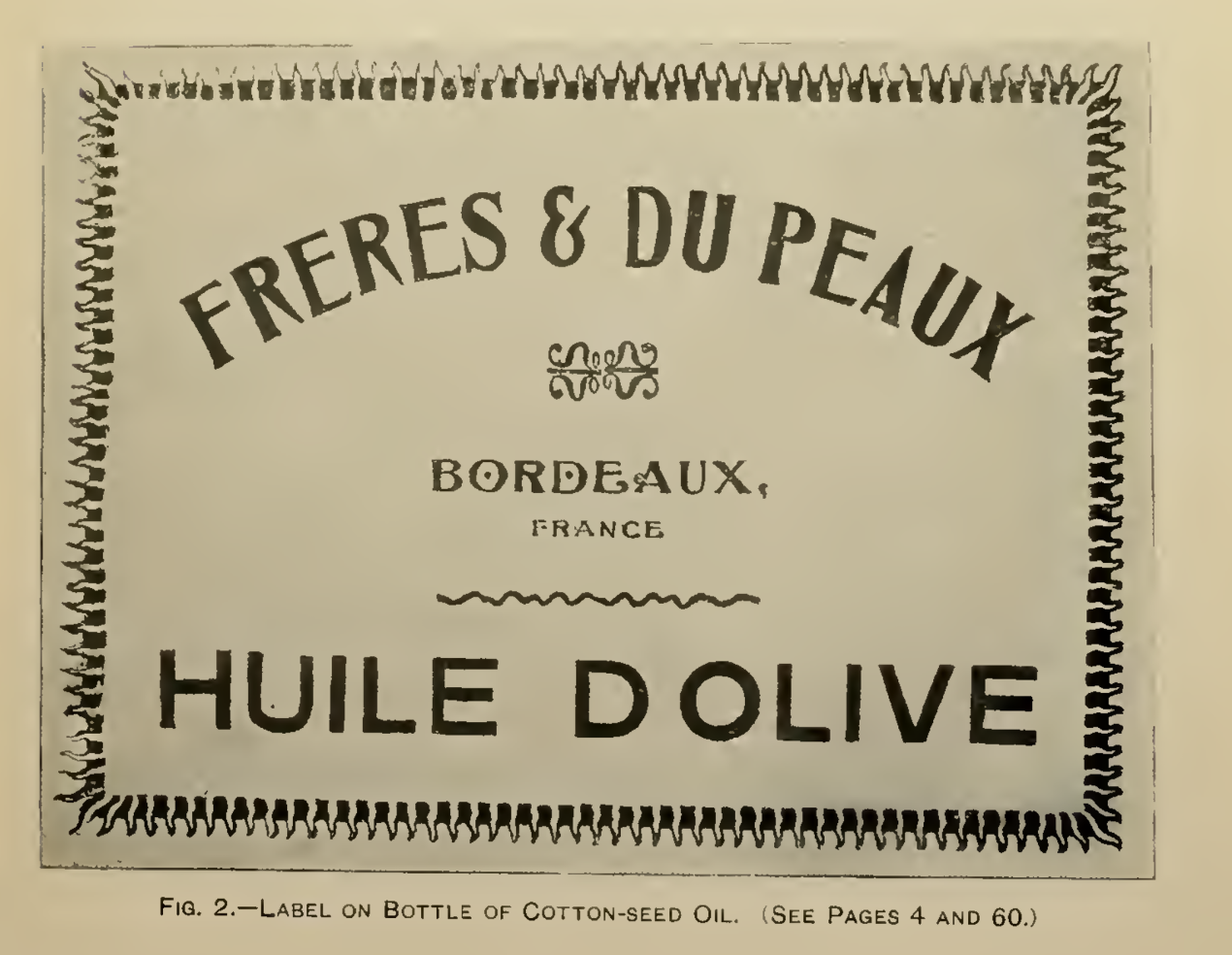
It wasn't just supposedly imported oils from Italy under suspicion; California labels were involved, too. When investigators tracked down one California brand, they discovered the company had been out of business for years. Someone had completely counterfeited the defunct brand's labels and sold the fake oil as if the company were still operating. Some "imported" oils had the exact same problem—the businesses on the labels either didn't exist or had long since closed.
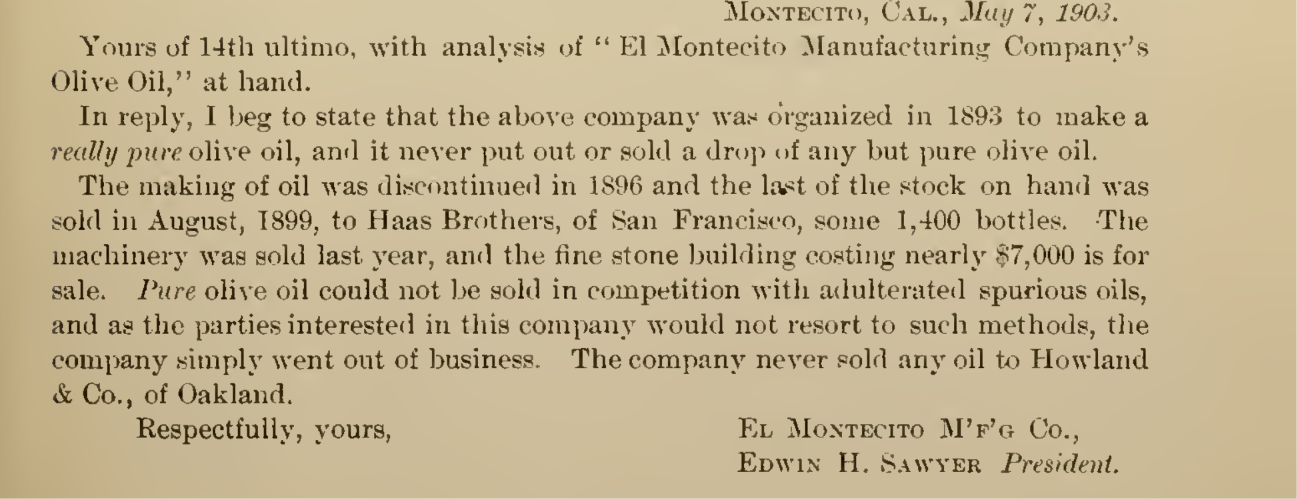
That would be like going to Safeway today and buying Cheese Nips—which were discontinued in 2020—only to find the cheese was actually orange-dyed nutritional yeast.
Ultimately, the 1903 report helped bolster the integrity of legitimate California olive oil. However, olive oil wasn’t the only way people were trying to make money off these trees.
Freda Ehmann and the Ripe Olive Industry
When looking at the founders of the modern olive industry, two names often get mixed up:
Charles Gifford: His olive company gets credit for being the first to package ripe olives in tin cans.
Freda Ehmann: She is widely credited as the founder of the commercial ripe olive industry as a whole (though some articles mistakenly credit her with inventing the tin-can method).
Freda Ehmann was a widow whose son bought an olive orchard at the height of the olive rush. When the Panic of 1893 struck, he was on the verge of bankruptcy. Freda stepped in with her own money to save the orchard, intending to cash out once the economy recovered. Instead, her son largely left the orchard to her while he pursued other business ventures, leaving her responsible for the entire operation.
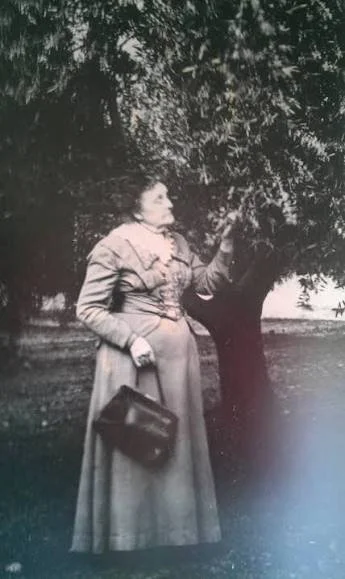
The orchard struggled for the first few years. Freda didn't want to compete in the olive oil market because imported oil was far cheaper, so she was advised to pickle the olives instead. While researching pickling methods, she connected with a UC Berkeley agriculturist who was studying the exact same thing.
Armed with his findings, Freda set up a makeshift laboratory on her back porch in 1896 using cut-in-half wine casks. After experimenting with lye, salt, and water, she found a formula that tasted great, smelled good, and resisted mold. Though she was initially disappointed that the olives weren't a uniform, glossy black, the UC Berkeley agriculturist urged her to sell them anyway.
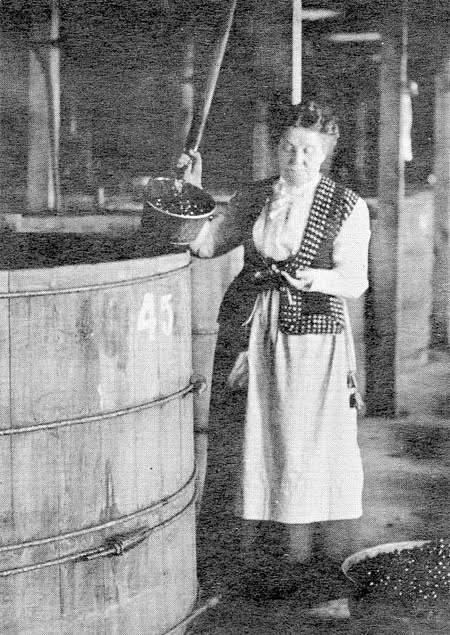
She did, and the business exploded. She targeted the Seattle market—supplying miners heading north for the Klondike Gold Rush—before going on a successful sales tour to Chicago, New York, and Philadelphia. She returned to California to open a commercial pickling company in Oroville, eventually adopting tin-can packaging in 1911 and expanding rapidly.
The 1919 Canton Botulism Outbreak
In the early 1900s, foodborne illness was a severe hazard. While meat was usually suspected in botulism cases, canned fruits and vegetables were also major culprits in the United States. In 1919, California ripe olives landed at the center of a deadly outbreak.
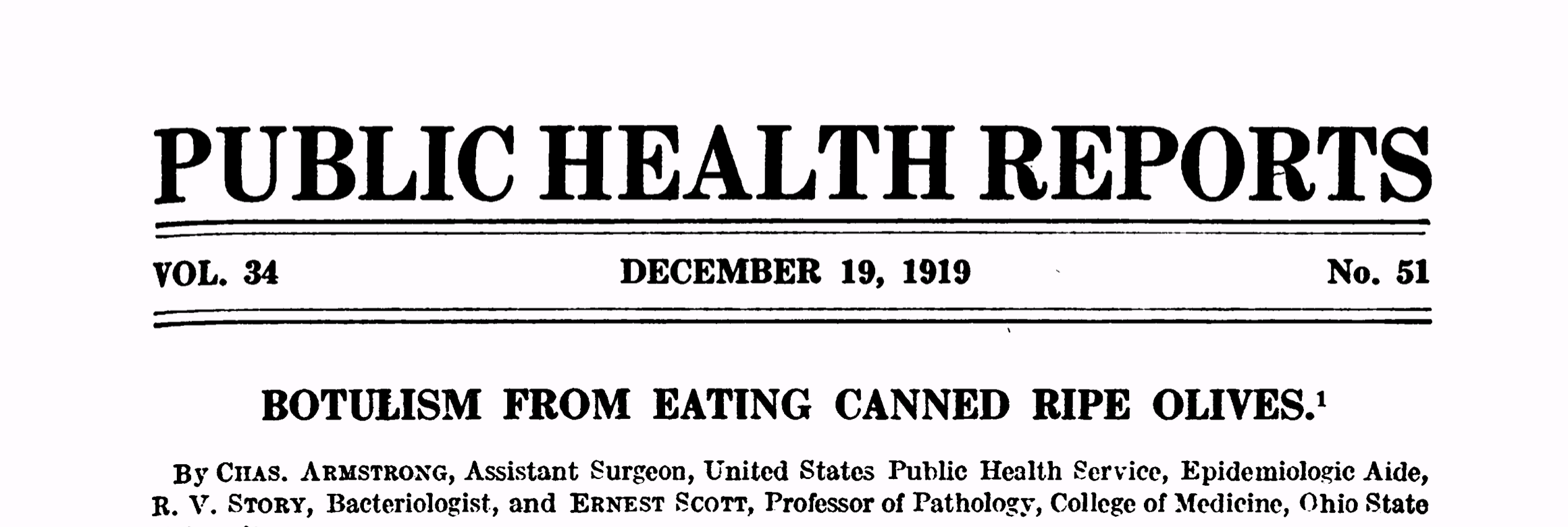
On August 23, 1919, roughly 200 guests gathered at a country club in Canton, Ohio, for a banquet celebrating the homecoming of war veteran Colonel Weybrecht. Shortly after the meal, guests seated at one specific table—along with members of the kitchen and waitstaff—fell violently ill. Within days, several were dead.
Investigators narrowed the cause down to botulism, but the source was a mystery. Everyone at the 200-person banquet ate the turkey, yet the illness was confined to a single group. Looking closer at the menu, investigators realized the hostess at that specific table had brought extra food from home for her guests: candied almonds, chocolates, creams, and a jar of ripe olives.

Witnesses recalled that the olives were horrid—they smelled like Limburger cheese, bit the tongue, and were largely inedible. The waiter noted that the jar's lid had popped right off without a vacuum seal. Rather than throwing them out, he served them in small dishes along the table. At the end of the night, waiters grazing on leftovers tasted the olives, noticed how bad they were, and took them to the chef. The chef ate two.
In total, 14 people fell ill, and seven died—five guests, one waiter, and the chef. One victim had reportedly eaten only half an olive. Investigators recovered the jar from the kitchen, labeled Mammoth Ripe Olives of California, and confirmed the toxin by testing the remaining olives on guinea pigs. Around the same time, a separate fatal botulism outbreak in Detroit was also linked to Mammoth ripe olives.
The tragedies forced an immediate overhaul in olive canning. Processors could no longer rely on surface cleanliness; new regulations required ripe olives to be heat-processed at 240°F for at least 40 minutes to destroy botulism spores.
Fallout and Regulation
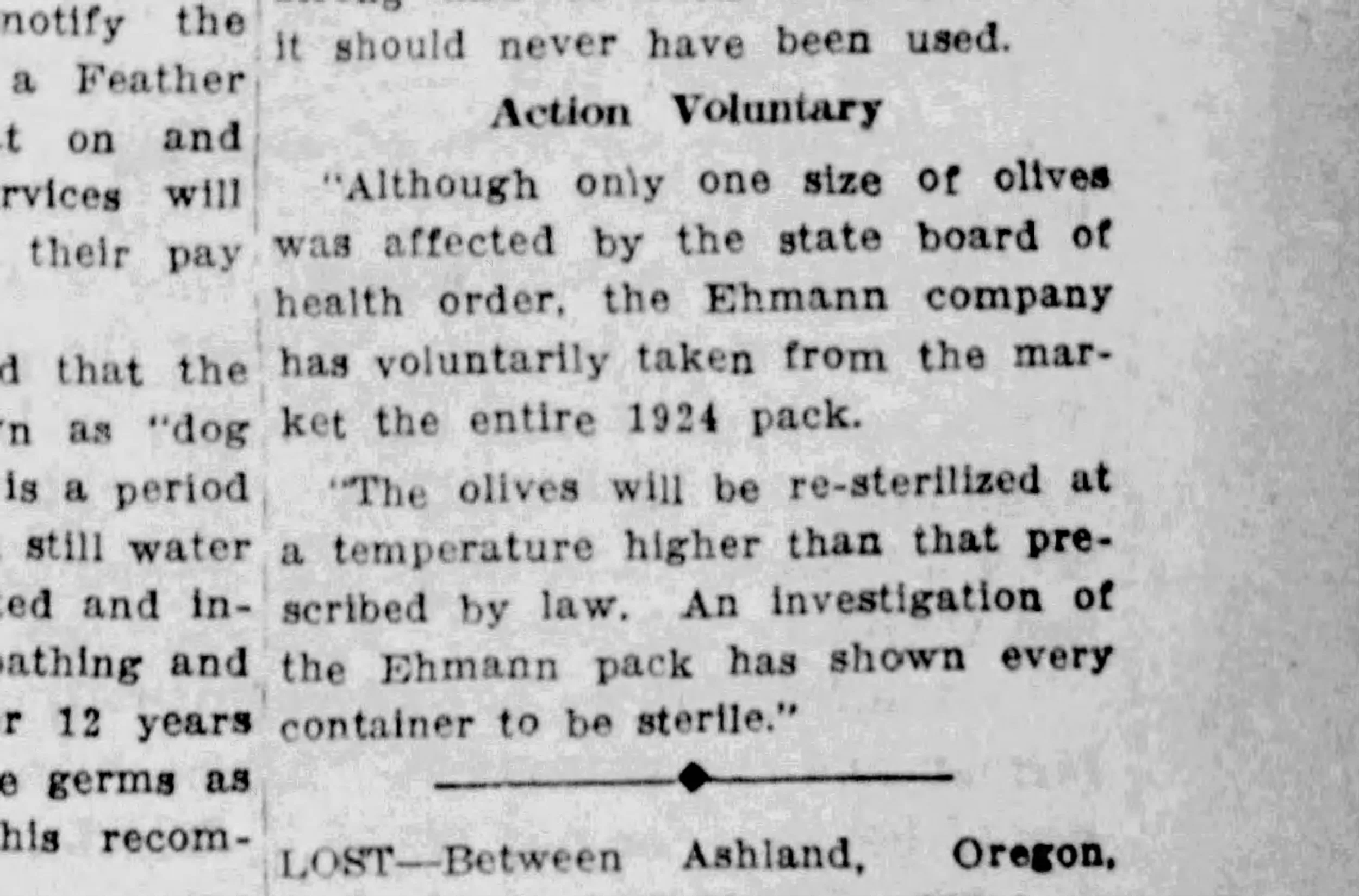
Stricter heat rules didn't immediately end the industry's troubles. In 1924, an aging Freda Ehmann retired and handed control of the Ehmann Olive Company to her son. Just a few months into his tenure as CEO, a fatal botulism outbreak was traced back to Ehmann olives.
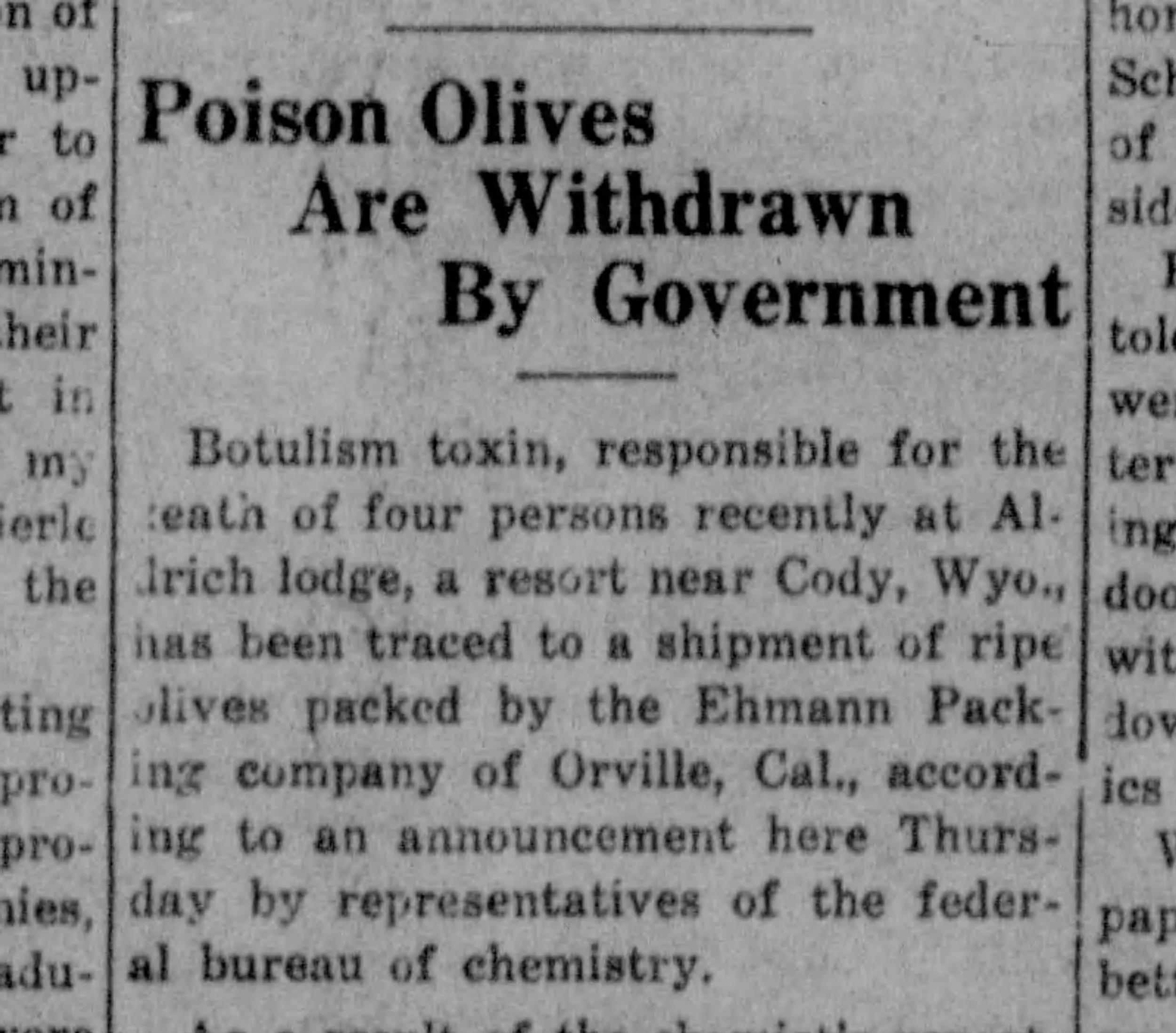
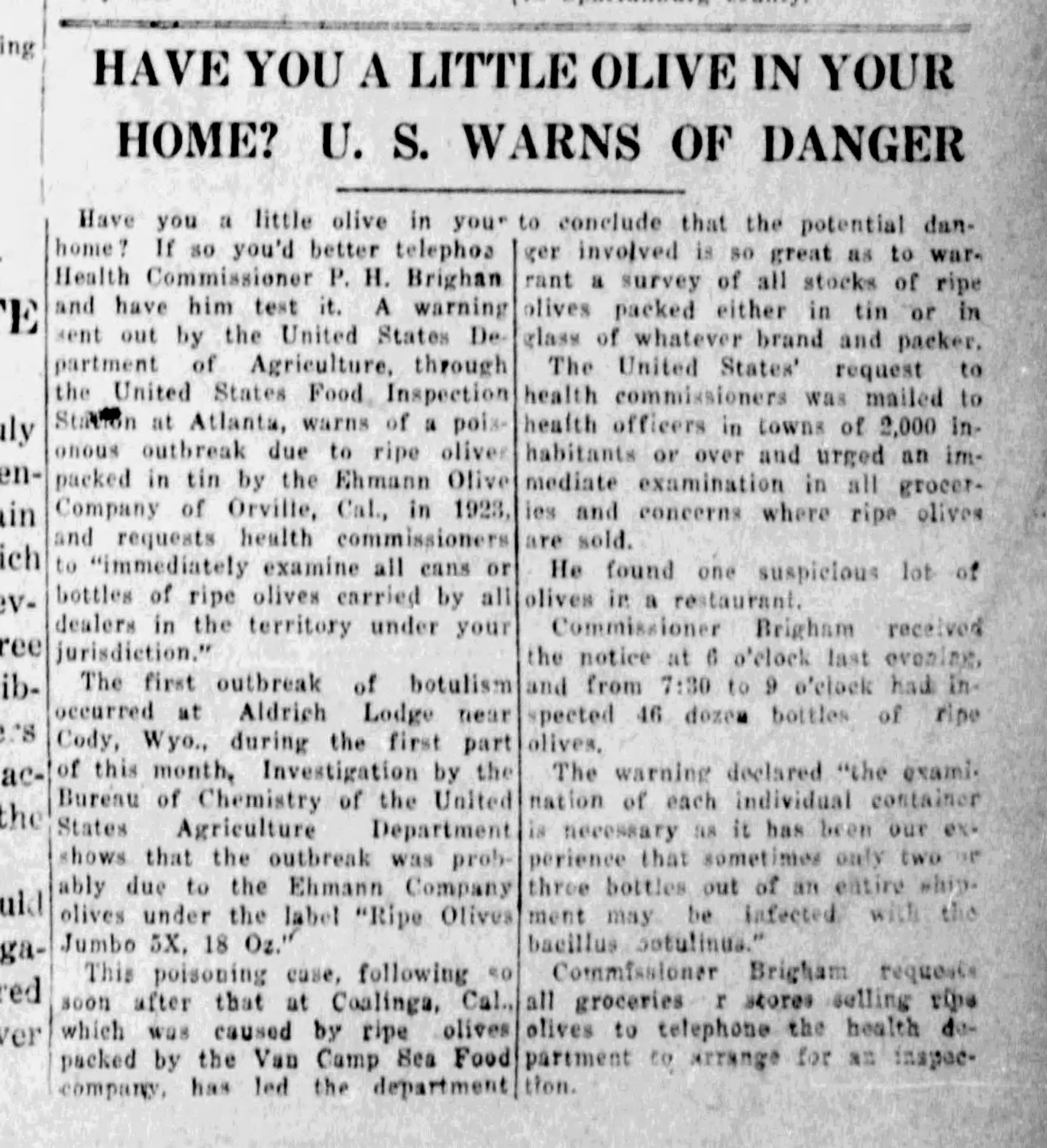
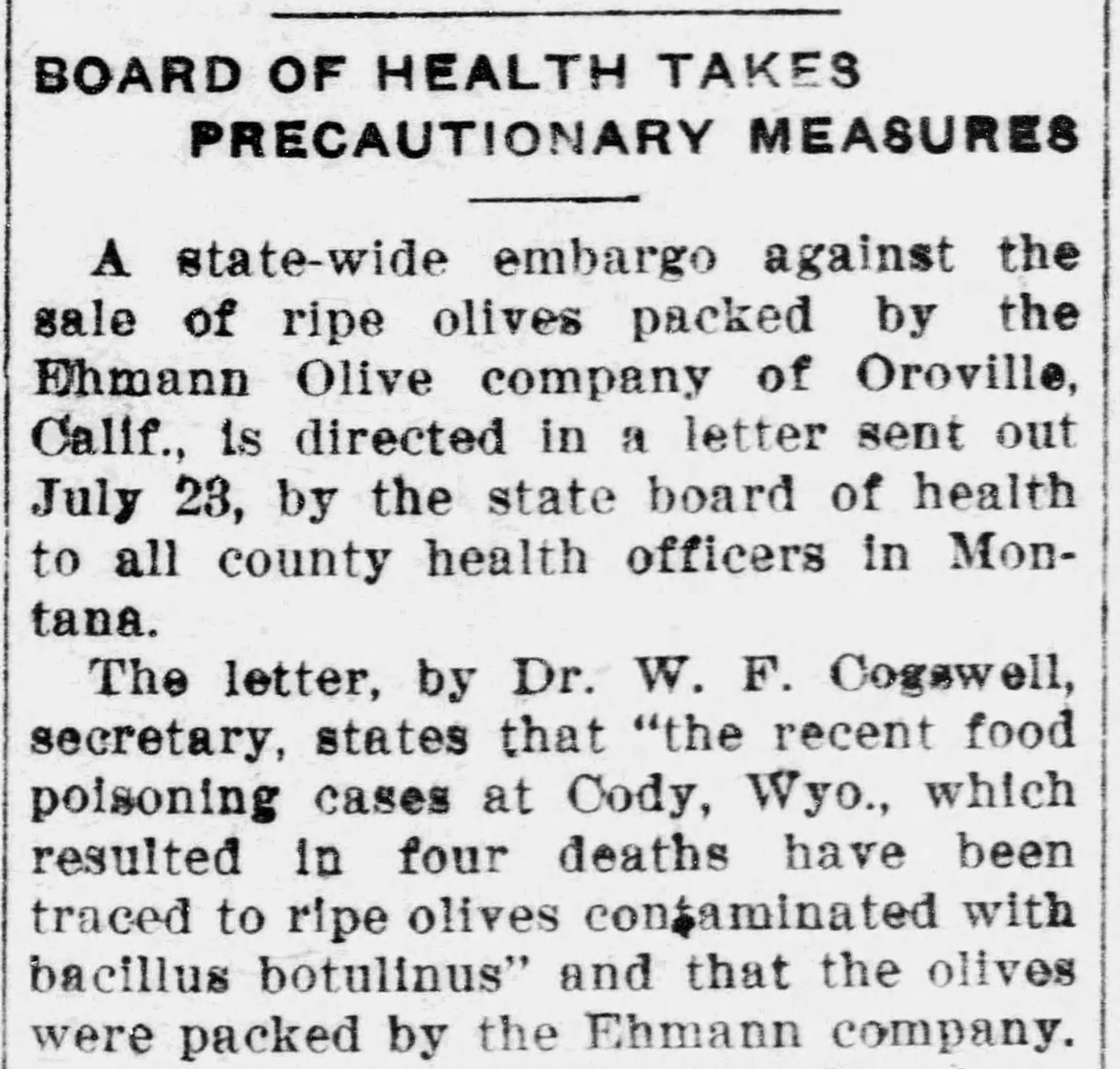
Newspapers across the country linked the Ehmann name to consumer deaths, and states quickly banned or embargoed their products. Although the company recalled and reprocessed its inventory—going beyond what the government required—its reputation never recovered, and the family eventually sold the operation to a competitor.
The following year, in 1925, California passed the Cannery Inspection Act, mandating strict state oversight for commercial canneries.
Full Circle
Oddly enough, California's olive industry started with olive oil, pivoted to ripe table olives as its primary moneymaker for decades, and has shifted back toward olive oil since the year 2000. Even with all that dramatic history, the United States still imports the vast majority of its olive oil.
So after all that, we are right back to olive oil—which was the only part worth liking in the first place.