The Forgotten Mussel Slough Tragedy
Seven Men, a Railroad, and a Broken Promise
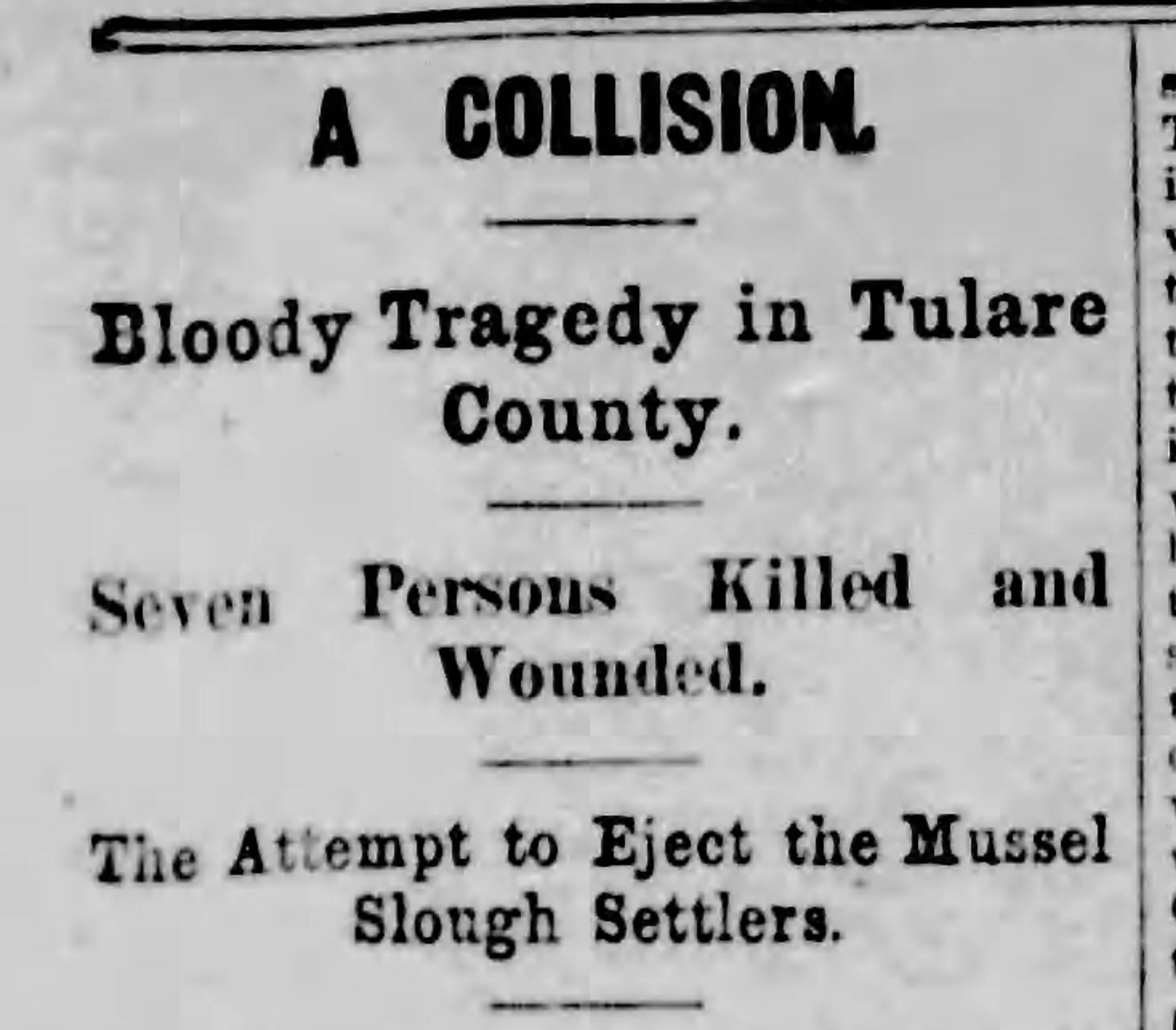
Let me tell you a story.
You are standing in a wheat field in California’s San Joaquin Valley in 1880. It is hot, dusty, and tense, and about twenty of your neighbors are riding toward a little farmhouse to “talk things out” with a U.S. marshal.
Thirty seconds later, seven men are on the ground.
Newspapers would call it a massacre. Railroad defenders would call it law and order. A novelist would later turn it into myth. And a pretty normal-looking patch of ground near Hanford would become one of the bloodiest and most argued-over gunfights in California history.
This was the Mussel Slough Tragedy.
The picnic before the gunfight
On May 11, 1880, settlers gathered near Hanford for what was supposed to be a political rally mixed with a community gathering. There was food, there were speeches planned, and people were waiting for anti-railroad attorney and former California Supreme Court justice David S. Terry to appear.
He never showed.
That mattered. Instead of one fiery speaker focusing the crowd, there was now a restless group of angry farmers with too much time to complain about the Southern Pacific Railroad and too much emotion already in the air.
Then came the rumor that changed the day. Word spread that a U.S. marshal was out in the countryside serving eviction papers and that railroad-aligned men were helping him.
That was enough. About twenty settlers armed themselves, got on horseback, and rode toward the farm of Henry Brewer, where the marshal’s buggy had reportedly been seen.
The setting could not have looked more ordinary. Wheat fields, flat land, heat, dust, and distance. Yet that ordinary farm landscape was about to become one of the most famous sites in California’s railroad history.
Four men waiting at Brewer’s farm
At Brewer’s place were four men tied to the legal side of the conflict: U.S. Marshal Alonzo Poole, Southern Pacific land agent William Clark, and two local settlers who had sided with the railroad, Mills Hartt and Walter J. Crow.
That is one of the most important parts of this story. Hartt and Crow were not faceless outsiders. They were neighbors. Men from the same region, living in the same larger conflict, who had made a different choice.
They had paid the railroad’s price and taken title to land that many other settlers still believed should be available on fairer terms. To members of the Settlers League, that looked less like survival and more like betrayal.
So when the riders from the picnic arrived and surrounded the buggy, they were not just confronting federal authority. They were staring down neighbors who had crossed a line the League considered unforgivable.
The promise that set this whole thing up
To understand why people were ready to die over land titles, the story has to go back roughly fifteen years. In the 1860s, the federal government wanted railroad expansion and used land grants to encourage it.
The system worked like a checkerboard. Railroads received alternate sections of land along their routes once they built the track, and they were expected to profit by selling that land later.
On paper, it sounded tidy. In practice, it created confusion, speculation, and resentment.
Southern Pacific originally planned a more coastal route, then changed course and cut inland through the San Joaquin Valley. That shift brought the future line through what would become Mussel Slough, placing settlers and railroad claims on a collision course.
The company did not merely tolerate settlement. It encouraged it. Settlers were drawn in by brochures and by the widespread belief that they would be able to buy the land later at fair prices, often discussed as around $2.50 an acre and upward, with improvements not supposed to raise the price.
That last part became the landmine. Families believed they could build homes, dig ditches, fence fields, and turn harsh land into productive farms without being punished for making it valuable.
And they did exactly that. They helped transform the area into productive agricultural country.
Then the railroad finished the line and the prices settlers were asked to pay were often far higher than what many had expected. Historical accounts describe prices jumping well beyond the original expectations, feeding the conviction that Southern Pacific had changed the deal after the settlers had done the hard work.
That is why this was never just a dry legal fight over acreage. To the settlers, it felt like a broken promise.
The Settlers League and the slide toward violence
By 1878, opposition to the railroad’s prices had become organized in the form of the Settlers League.
At first, the fight looked respectable. The settlers petitioned, wrote legislators, appealed to courts, and pushed their case through formal channels.
But the courts kept siding with the railroad. Judges repeatedly upheld the land grant and Southern Pacific’s legal title.
That legal reality did not calm the valley down. It made the losing side more desperate.
Over time, the conflict darkened. Reports emerged of intimidation, threats, masked riders, and barn burnings aimed at settlers who made deals with the railroad.
That detail matters because it shows that the valley was already splitting apart before the shooting. Mussel Slough was not a sudden argument that spun out of control in an otherwise peaceful place. It was the violent breaking point of a struggle that had already turned neighbors against one another.
Walter Crow and why he became a symbol
Walter J. Crow became one of the defining figures of the tragedy. Later retellings often flatten him into either a villain or a victim, but the historical picture is more complicated.
Crow was local. He was not imported muscle sent in from somewhere else. He knew the country and the people involved.
What made him stand out was that he had bought from Southern Pacific. He represented a path some settlers had taken and others despised. In the eyes of League supporters, he was the man who had accepted the railroad’s rules and benefited from land others still believed was morally theirs.
He also had a reputation as a capable marksman and carried a 10-gauge double-barrel shotgun on the day of the confrontation. That detail would become central to later memory of the gunfight because he appears to have been the most deadly shooter on the railroad-aligned side.
That made Crow more than just another participant. He became the face of the railroad side in a fight where symbolism mattered almost as much as law.
How the standoff turned deadly
When the armed settlers reached Brewer’s farm, they found the buggy and its four occupants. Accounts differ on some details, but they agree on the broad outline: the settlers surrounded the buggy, tempers exploded, and the argument centered on whether the marshal should continue serving papers.
The settlers wanted the process stopped or delayed while legal efforts continued. Poole insisted he had authority and orders to carry out his duty.
Then the confrontation crossed the point of no return. Mills Hartt and settler James Harris, who already had bad blood between them, exchanged words. Hartt fired. Harris fired back. Hartt went down.
That first exchange opened the floodgates. Walter Crow turned his shotgun on the tightly packed settlers and fired into the group at close range. Several men fell immediately, and others were wounded badly enough that they would later die.
The whole burst of violence seems to have lasted no more than about twenty to thirty seconds in many retellings. When it ended, five League settlers were dead or dying, Hartt was dead, and Crow had become the central surviving gunman on his side.
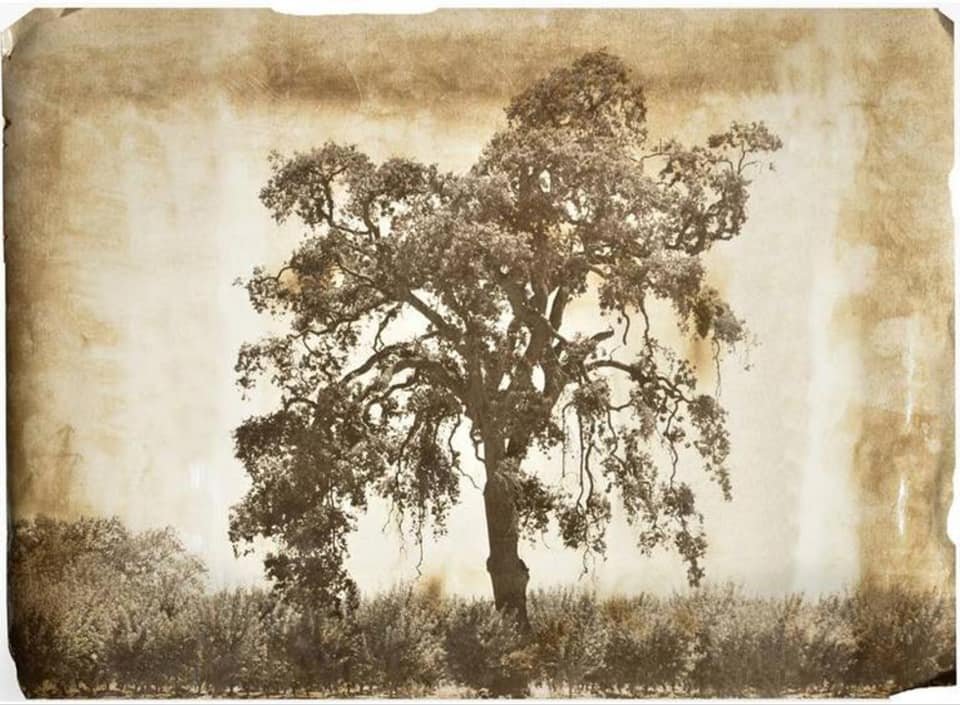
The dead and wounded were carried to Brewer’s porch and laid beneath the large oak tree later known as “Tragedy Oak.” The image of bodies laid out beneath that tree helped seal the event into local memory.
The killing of Walter Crow
Crow escaped the immediate scene, but not the day. Roughly a mile and a half away, near a stand of trees, he was shot in the back and killed.
No one was ever definitively identified, tried, or convicted for that killing. In practical terms, it became one more death folded into the larger bitterness of Mussel Slough.
By the time the dust settled, seven men were dead.
That number is one reason the story held such power. The conflict had not just produced one accidental death or a courtroom scandal. It had become a mass killing rooted in a land dispute.
What the legal system did next
The aftermath was not a sweeping murder reckoning. Later legal action focused more on interference with a U.S. marshal than on delivering a single, morally satisfying explanation for the bloodshed.
That outcome left many people on both sides frustrated. To settlers and their supporters, the courts still looked like instruments of railroad power. To defenders of the railroad, the armed resistance to lawful process still looked like the true crime.
That divide helped the tragedy continue as a political and emotional argument rather than settle into a neat legal ending.
How newspapers and fiction turned it into legend

The gunfight might have remained a local horror story if it had not entered a larger war of public opinion. Many California newspapers already hated Southern Pacific because of its wider economic and political power.
That meant the event quickly became a ready-made symbol. In some tellings, settlers became innocent victims and the railroad side became ruthless corporate enforcers. In other tellings, the settlers became armed squatters obstructing the law.
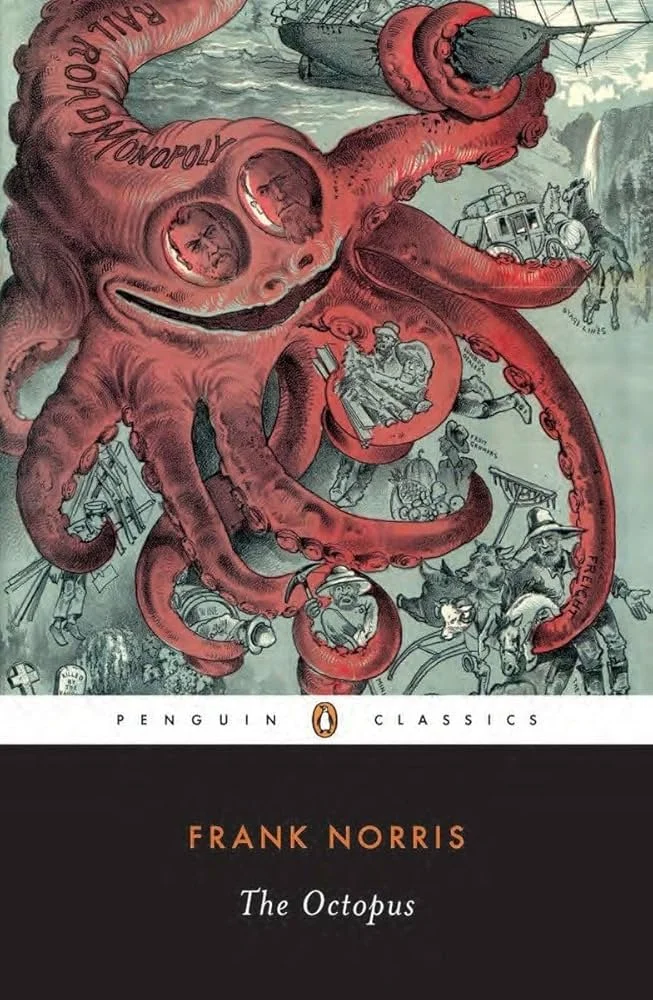
Then came the most influential retelling of all. Frank Norris drew inspiration from Mussel Slough for his 1901 novel The Octopus: A Story of California.
The novel transformed the fight into something bigger and cleaner than the reality. It turned the railroad into a huge symbolic monster strangling California, and that image stuck.
For many people outside the valley, The Octopus did more to define Mussel Slough than the actual event ever did. That is how a land dispute became a national symbol of anti-corporate outrage.
The place today
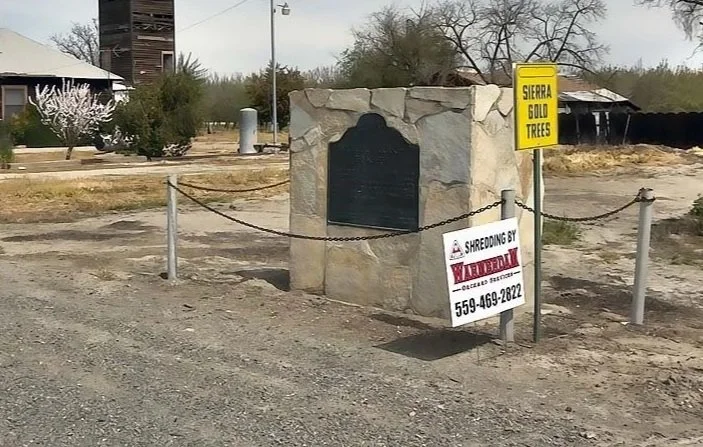
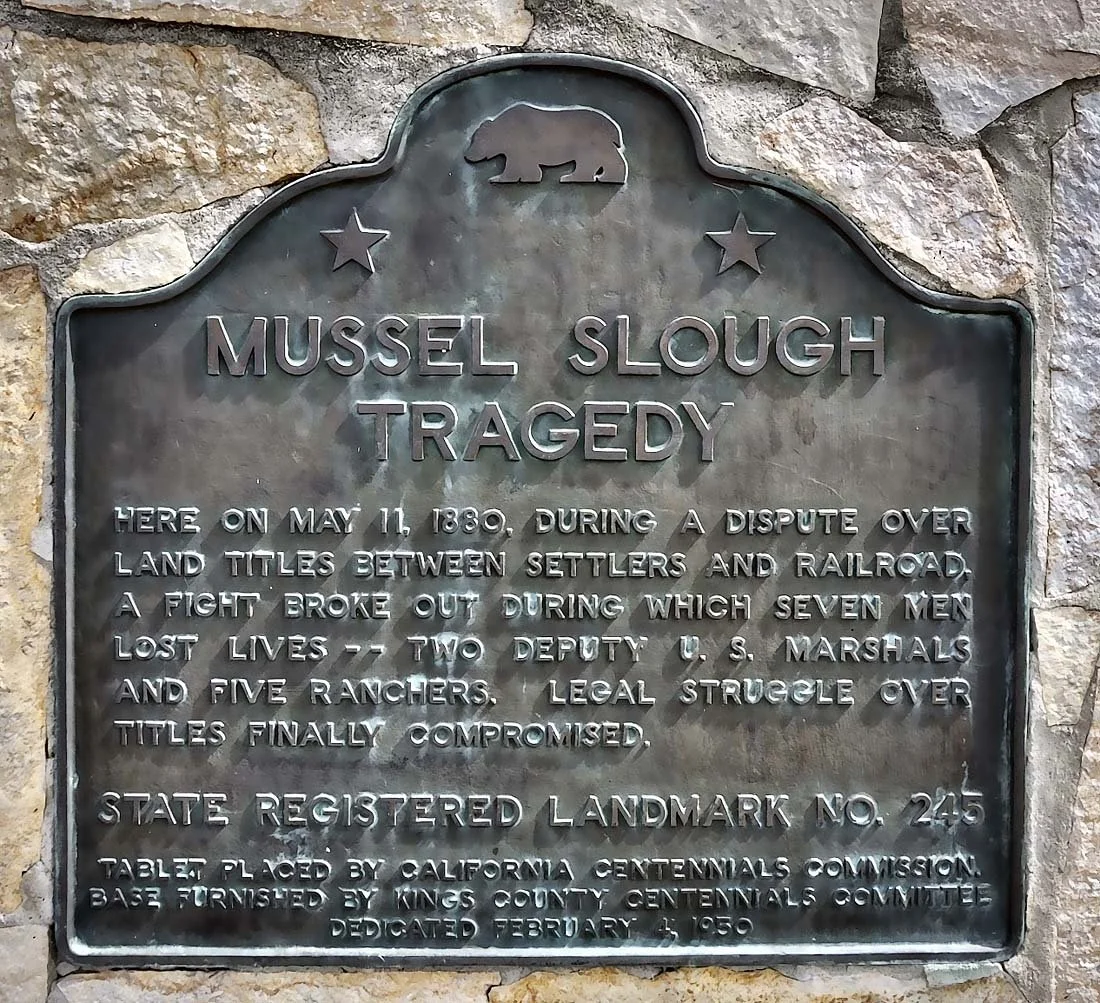
The site of the tragedy is now marked as a California Historical Landmark. Marker references and historical databases place it near Hanford in Kings County and preserve the official public memory of the event.
The place itself does not look like the kind of ground where one of the state’s most famous land wars exploded. That contrast is part of what makes the story powerful. The setting looks ordinary, but the questions it raises still feel modern.
What happens when the law says one thing and ordinary people feel fairness says another? What happens when a company follows the letter of a deal but not the spirit people believed in? Mussel Slough still lands because those questions have not gone away.
Why Mussel Slough still matters
Mussel Slough was never just a story about good men and bad men. It was a collision between legal right and moral right.
On one side stood land grants, contracts, titles, and court rulings. On the other stood labor, reliance, settlement, and a belief that the terms had shifted after the hard work was done.
That is why the story still feels alive. It is not just about 1880. It is about what happens when institutions insist they are right on paper and people insist they were wronged in practice.
Seven men died in that wheat field believing they were in the right.
And a quiet patch of the San Joaquin Valley became the place where California found out what happens when you build a railroad on promises… and then forget the people who believed them.