The Forgotten Ice Trade of California
In the late 1800s, California depended on winter.
Not gold.
Not oil.
Not electricity.
Winter.
Every summer drink in San Francisco, every shipment of fruit leaving the Central Valley, and every miner working two thousand feet underground depended on one thing: ice.
And that ice existed for only a few weeks each year.
When the ponds and lakes in the Sierra Nevada froze solid, men rushed onto them and harvested the surface like wheat—cutting enormous blue blocks from the earth itself. They stacked it forty feet high in sawdust-lined warehouses, shipped it by rail, fought over it, monopolized it.
For a few decades, frozen water quietly powered California’s growth.
This is the story of the Sierra Nevada ice industry.
From Ships to Sierra: The Shift from Imported Ice
Before California harvested its own, it bought ice.
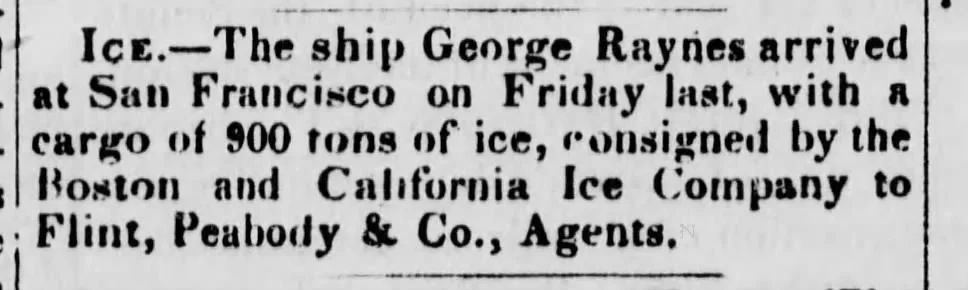
In 1850, nearly all ice used in San Francisco came from Boston. Cut from frozen New England ponds, loaded onto ships, and sent more than fifteen thousand miles around Cape Horn. By the time it arrived, it sold for about twelve dollars and fifty cents per hundred pounds—roughly five hundred dollars in today’s money.
For ice.
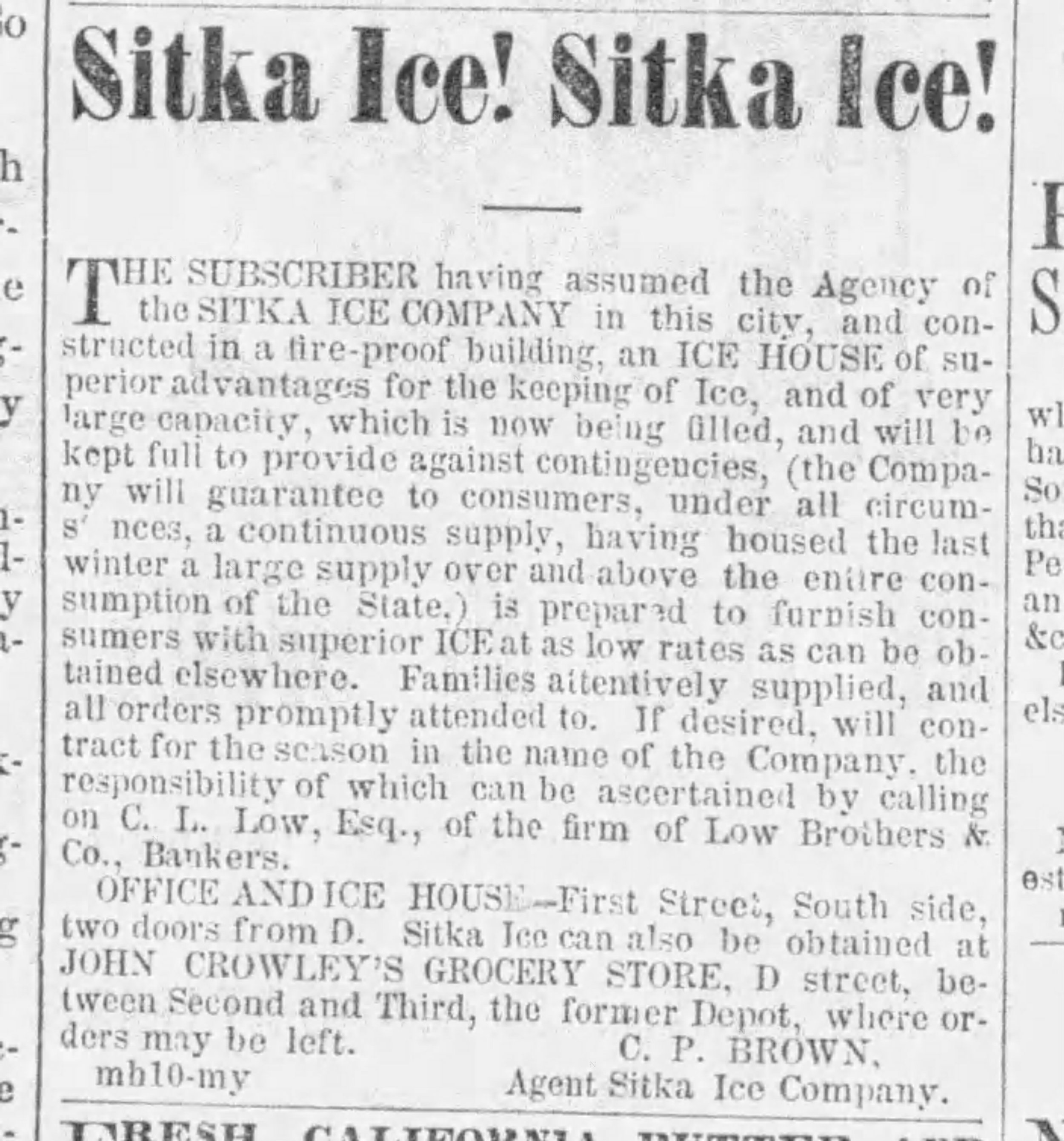
Boston dominated until 1852, when the Sitka Ice Company began shipping from Alaska. Closer. Faster. Cheaper. Sitka ice sold for around ten dollars per hundred pounds and took control of much of California’s supply.
Then, in 1853, competition arrived. The California Ice Company undercut prices at about seven dollars per hundred pounds.
A price war erupted. Sitka dropped to five dollars, sold at a loss to crush rivals, and in 1856 bought out the California Ice Company. Prices rose back to ten dollars once the monopoly was secure.
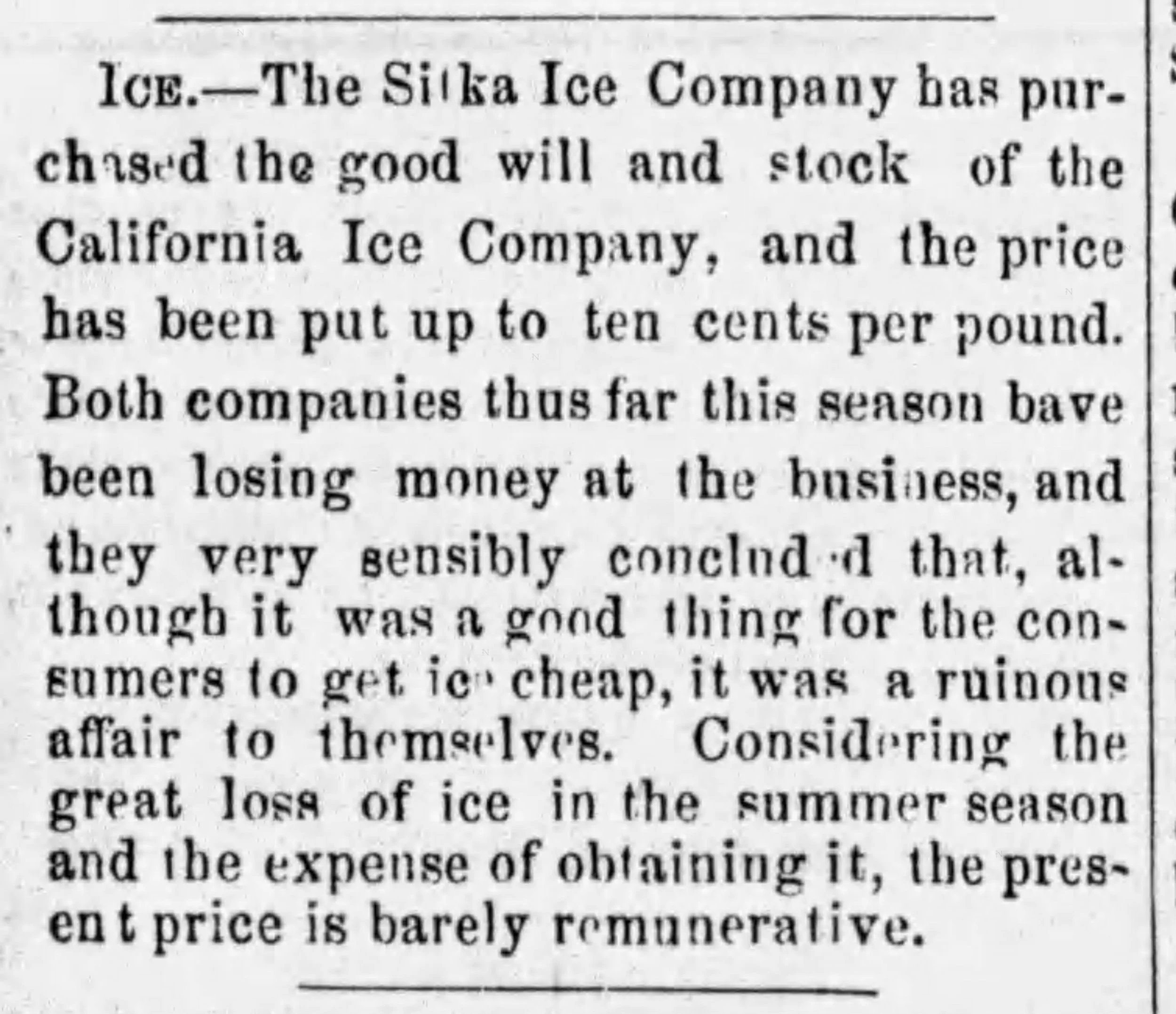
A price war erupted. Sitka dropped to five dollars, sold at a loss to crush rivals, and in 1856 bought out the California Ice Company. Prices rose back to ten dollars once the monopoly was secure.
But it still depended on ships.
Meanwhile, every winter the Sierra Nevada froze solid—lakes and millponds up to sixteen inches thick with clear blue ice. California wasn’t short on supply. It was short on transport.
The Railroad Unlocks the Mountains
Before trains crossed the Sierra in the late 1860s, Sierra ice remained a dream.
Once the railroad arrived, everything changed. Within a few years, California stopped relying on imports. It started producing its own.
Boca: Built for Cold
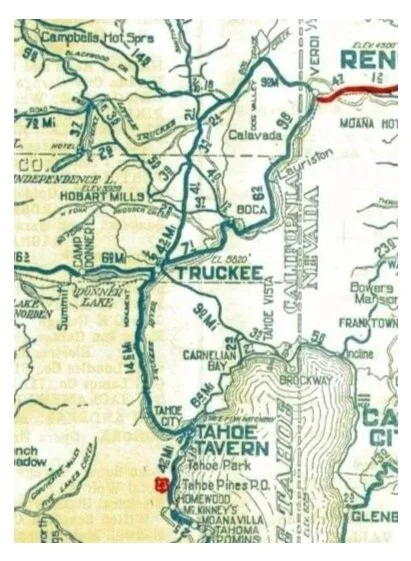
By the early 1870s, the epicenter was Boca—along the Little Truckee River, about twenty miles northeast of Truckee. Today, I-80 drivers speed past without realizing a full industrial town once stood there.
It wasn’t built for views. It was built for cold.
Settlers arrived in 1868 when the Boca Mill and Ice Company began operations. Temperatures dropped to fifteen or twenty below zero routinely. Most called it miserable. Boca called it opportunity.
They dammed the Little Truckee, creating a 180-acre millpond. In summer, it held logs. In winter, it froze solid—a factory floor.
Six massive icehouses lined the shore, each holding thousands of tons. Ice cut from the pond floated two hundred yards down a canal, hauled up a tramway, and packed in sawdust. Stacked forty feet high—like frozen skyscrapers laid on their side.
By 1872, Boca shipped more ice, wood, and shingles than anywhere between San Francisco and Omaha.
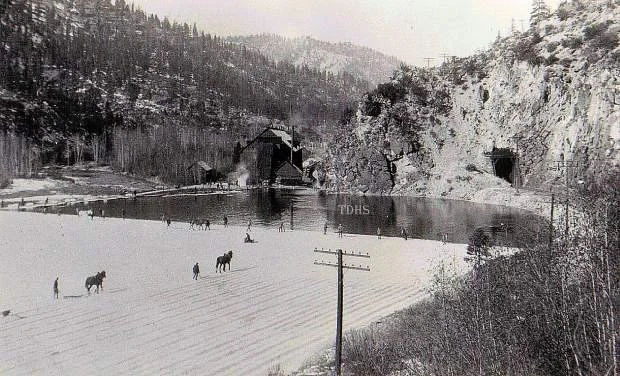
The Workers: Lumberjacks Turned Icemen
Most ice cutters weren’t professionals. They were lumberjacks—cutting trees in summer, water in winter.
The season was short: a week, maybe a month if perfect. When it froze, you moved fast. Days started at dawn, ended at dusk. Pay: three dollars a day, room and board included. Decent money.
How They Harvested It
First, clear the pond. Summer logs floated out, debris boomed aside. Wait for clean freezing—no first skim counted.
Snow was the enemy: it insulated, slowed thickening, clouded refreezes. Crews cleared it by hand (horses too heavy early), later with scraping machines.
Good ice had a blue tint—clear enough to see into. Money ice.
Then scoring: ice plows carved long straight lines, back and forth, dividing the pond into a perfect 22-by-22-inch grid.
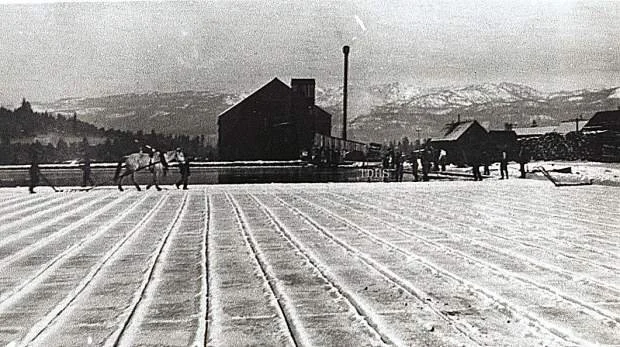
Men followed with long saws to finish cuts. Freed blocks averaged 225 pounds (some six or seven hundred). Guided with pike poles into channels—gravity did the rest if downhill. Upward? “Dog belts”—conveyor-like chains.
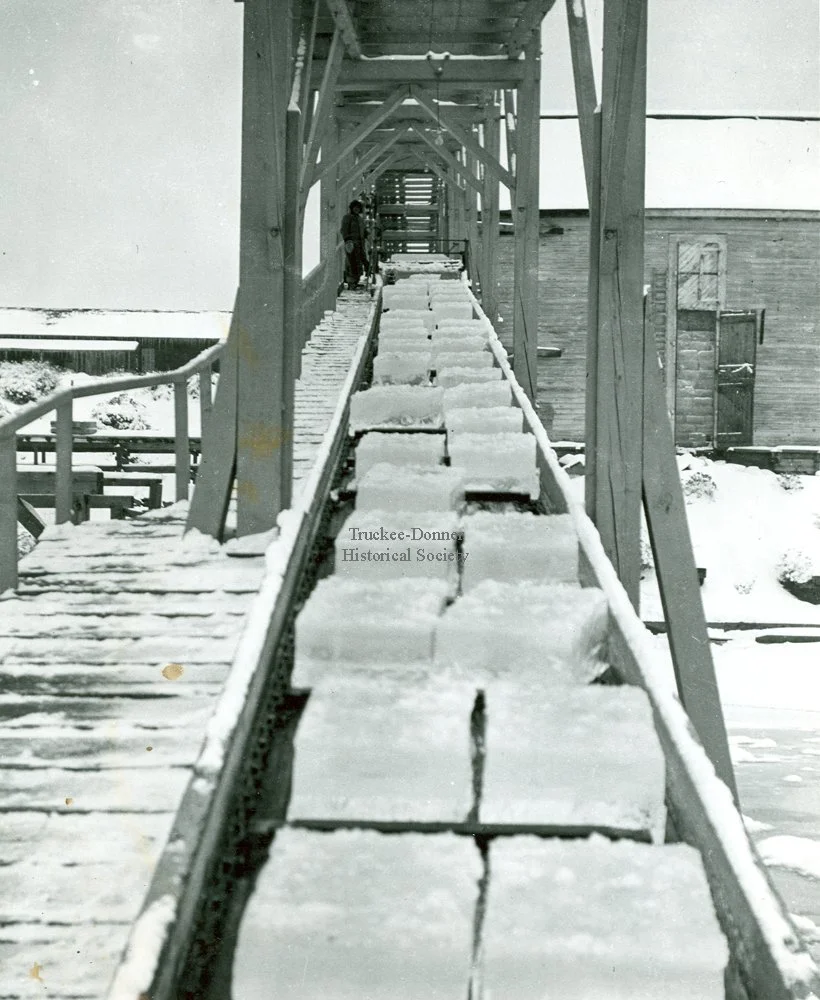
Inside icehouses: stacked layer by layer, separated with sawdust. Sawdust trapped air, slowed melting. Buildings two hundred feet long, ice forty feet high. Packed tight. Sealed.
Done right, January-cut ice lasted into September—two or three years.
A harvest day began before sunrise: stepping onto the pond in darkness, lantern light, breath hanging, boots scraping frost. Thickness checked. Plows started. By mid-morning, steel teeth bit ice. First block free—guided into channels, blue squares sliding. Canals filled. Blocks drifted, hauled up, stacked.
Then sawdust. Insulation. Preservation.
The Real Impact: Saving Lives and Moving Fruit
None stayed in Boca.
Two thousand feet underground in Nevada’s Comstock Lode, rock hit 125 degrees. Miners got ice water after fifteen minutes—not luxury, survival. Some operations issued ninety-five pounds per miner daily. In 1872, Comstock mines consumed over a thousand tons.
Ice packed into blowers forced chilled air down shafts—pushing back deadly heat.
It literally saved lives.
Agriculture too: California fruit crossed mountains to Chicago or New York without rotting. Railcars packed with Sierra ice. Reefer cars re-iced at summits. Without this frozen supply chain, California agriculture doesn’t scale.
This wasn’t about cocktails. It was industry.
The Slow End
The ice industry didn’t collapse overnight. It faded.
By the 1880s, artificial ice plants improved. Refrigeration advanced. In 1882, after price wars, Sierra companies consolidated under the Union Ice Company.
For a while, it worked. Boca still cut, stacked, shipped.
But mechanical refrigeration became reliable. No waiting for ten inches. No snow clearing. No grids. Flip a switch.
By the early 1900s, artificial plants replaced natural harvests. Boca’s last major cuts: mid-1920s.
In 1939, Boca Dam submerged the town. Today, I-80 passes over a buried chapter of California’s industrial story.
The Part Nobody Advertises
Horses pulled plows across ponds. Horses left things behind.
When it happened, someone yelled “Red Hot!” A young worker ran out with a wooden cart, scraped it clean before it froze—because that block might end up in a San Francisco hotel or Sacramento saloon.
That was the job.
Cutting winter into blocks.
Stacking it against summer.
Keeping miners alive.
Moving fruit across a continent.
And sometimes… cleaning up after horses.
Before refrigeration.
Before electricity.
California ran on ice.